

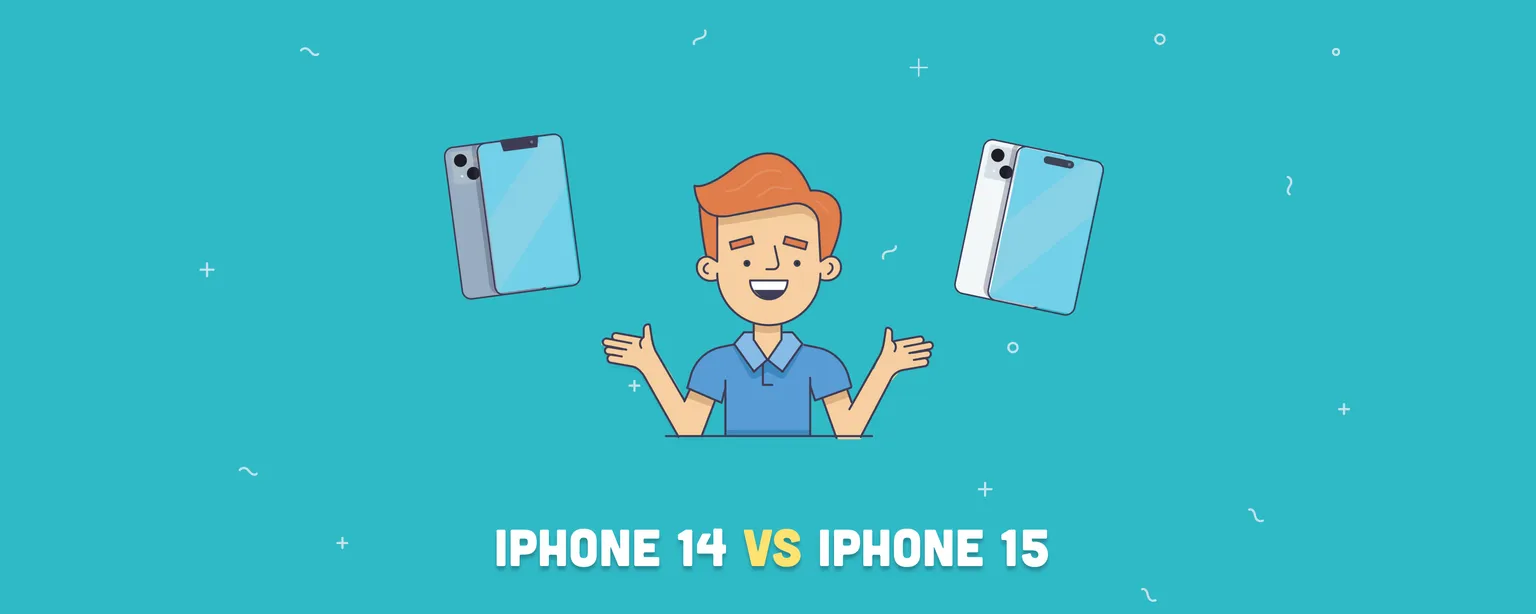
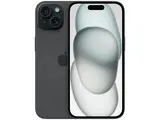
Both the iPhone 14 and iPhone 15 are older models now, which is exactly why they are some of the best value buys on the refurbished market in 2026. The iPhone 15 brought Dynamic Island, a 48MP main camera, USB-C, and a brighter 2,000-nit display. The iPhone 14 still delivers excellent performance with the A15 Bionic chip and costs meaningfully less. At current refurbished prices, the gap between them is often $50 to $100, which makes the decision genuinely interesting. Neither phone will let you down. The question is where your money goes furthest.
Quick verdict: iPhone 14 or iPhone 15?
Buy the refurbished iPhone 15 if you want the better camera and longer life; buy the refurbished iPhone 14 if you want the lowest price. The iPhone 15 adds a 48MP main camera (up from 12MP), USB-C charging, Dynamic Island, a 2,000-nit display, and roughly one more year of iOS updates, all for about $50 to $100 more on the refurbished market. The iPhone 14 keeps the same 6.1-inch OLED screen, Face ID, and A15 Bionic performance at the lowest price. For most buyers in 2026, the iPhone 15 is the better long-term value; for tight budgets, the iPhone 14 is hard to beat.
Here is a thorough comparison of the iPhone 14 vs. the iPhone 15 to help you decide.
Table of contents
- Quick verdict: iPhone 14 or iPhone 15?
- Reasons to buy the iPhone 14
- Reasons to buy the iPhone 15
- iPhone 14 vs. iPhone 15 at a glance
- iPhone 14 vs. iPhone 15: How do they compare?
- Conclusion
- Frequently asked questions
Reasons to buy the iPhone 14
- Similar day-to-day performance to the iPhone 15
- Familiar design with a classic notch and Lightning port
- All-day battery life (up to 8 hours screen-on time)
- 4K video recording, Action Mode, and Cinematic Mode
- Lower price on the refurbished market in 2026
Reasons to buy the iPhone 15
- Dynamic Island replaces the notch for a more modern look
- 48MP main camera: a generational leap over the 14's 12MP sensor
- A16 Bionic chip (the same chip as the iPhone 14 Pro)
- USB-C port for universal charging compatibility
- Brighter display: 2,000 nits peak outdoor brightness vs. 1,200 nits on the 14
- Up to 9 hours of screen-on battery life
- One additional year of expected iOS software support

iPhone 14 vs. iPhone 15 at a glance
Here are all the key similarities and differences between the iPhone 14 and the iPhone 15.
| Feature | iPhone 14 | iPhone 15 |
|---|---|---|
| Dimensions | 5.78 x 2.82 x 0.31 in 71.5 x 146.7 x 7.8 mm | 5.81 x 2.82 x 0.31 in 71.6 x 147.6 x 7.8 mm |
| Weight | 6.07 oz 172 g | 6.02 oz 171 g |
| Colors | Midnight, Starlight, Blue, Purple, (Product)RED, Yellow | Black, Blue, Green, Yellow, Pink |
| Display size | 6.1 inches | 6.1 inches |
| Display type | Super Retina XDR OLED | Super Retina XDR OLED |
| Peak brightness | 1,200 nits (HDR) | 2,000 nits (outdoor) |
| Resolution | 2,532 x 1,170 at 460 PPI | 2,556 x 1,179 at 460 PPI |
| Refresh rate | 60Hz | 60Hz |
| Processor | A15 Bionic 5-core GPU 16-core neural engine | A16 Bionic 5-core GPU 16-core neural engine |
| RAM | 6GB | 6GB |
| Rear cameras | 12MP dual-camera system ƒ/1.5 aperture | 48MP dual-camera system ƒ/1.5 aperture |
| Front camera | 12MP TrueDepth Autofocus | 12MP TrueDepth Autofocus |
| Video recording | 4K at 24, 25, 30, 60 FPS HDR with Dolby Vision 1080p 240 FPS slow motion Sensor-shift optical image stabilization | 4K at 24, 25, 30, 60 FPS HDR with Dolby Vision 1080p 240 FPS slow motion Sensor-shift optical image stabilization |
| Action Mode | Yes | Yes |
| Battery life (video playback) | Up to 20 hours | Up to 20 hours |
| Battery life (screen-on) | ~8 hours | ~9 hours |
| Storage | 128GB, 256GB, 512GB | 128GB, 256GB, 512GB |
| Face ID | Yes | Yes |
| MagSafe | Yes | Yes |
| Water and dust resistance | IP68 | IP68 |
| Max OS compatibility | iOS 27 | iOS 27 |
| SIM | eSIM | eSIM |
| Charging port | Lightning | USB-C |
| Connectivity | 5G, Wi-Fi 6, Bluetooth 5.3, Emergency SOS via satellite | 5G, Wi-Fi 6, Bluetooth 5.3, Emergency SOS via satellite |
| Price (refurbished) | Starts at | Starts at |
iPhone 14 vs. iPhone 15: How do they compare?
Design
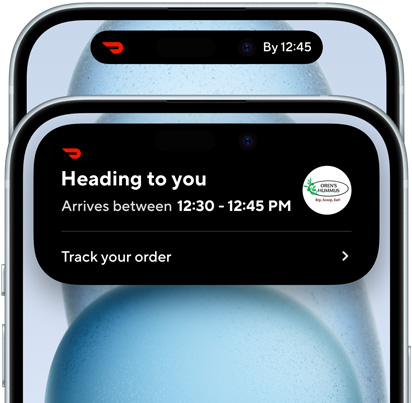
The iPhone 14 and iPhone 15 are nearly identical in size and weight, but the most visible change is the front of the phone. Apple replaced the iPhone 14's classic notch with Dynamic Island on the iPhone 15, a pill-shaped, software-driven hub that displays live activities, notifications, and shortcuts without obscuring your content.
Dynamic Island expands and contracts fluidly to show incoming calls, music playback, delivery tracking, sports scores, and more. It makes the phone feel genuinely more modern and keeps the entire display free for full-screen apps and videos.
Dynamic Island Image by: Apple
That said, the notch on the iPhone 14 is not a problem in daily use. Most people stop noticing it within days. Worth noting: the iPhone 14 Pro and Pro Max also have Dynamic Island, but the standard 14 Plus does not.
Beyond the front, the iPhone 15 has softer contoured edges on both the front and back, a matte color-infused glass finish, and new colorways. Their dimensions and weight remain almost identical at 71.5-71.6 mm wide and 6.0-6.1 oz.
Display
Both phones carry a 6.1-inch Super Retina XDR OLED display with a pixel density of 460 PPI and a 60Hz fixed refresh rate. That 60Hz cap applies to both; only the iPhone 15 Pro and Pro Max offer 120Hz ProMotion.
Where the iPhone 15 pulls clearly ahead is brightness. The iPhone 15 hits a peak outdoor brightness of 2,000 nits, compared to 1,200 nits on the iPhone 14. That is a substantial difference in direct sunlight. Text, maps, and photos are noticeably easier to read on the 15 outside on a bright day.
The iPhone 15 also offers improved color accuracy and contrast ratio over its predecessor, though both displays look excellent for everyday media consumption, social scrolling, and gaming.
Cameras
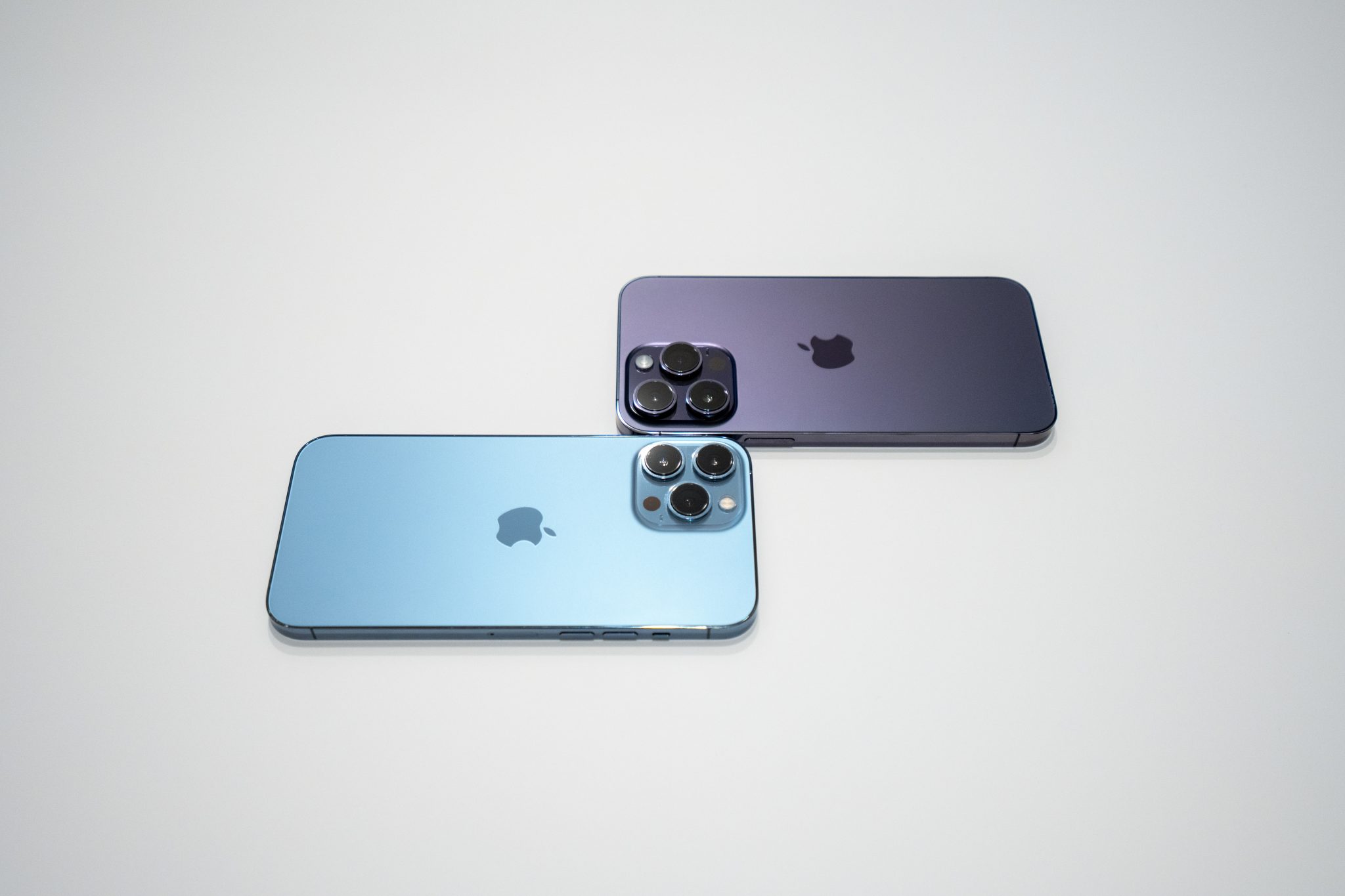
The camera gap between these two phones is the clearest reason to choose the iPhone 15. Apple upgraded the main camera from 12MP on the iPhone 14 to 48MP on the iPhone 15, a resolution jump that Apple had previously reserved for Pro models only.
In practice, this means the iPhone 15 can capture images with far more detail, especially when cropping or zooming in after the fact. A 2x optical-quality zoom is available on the iPhone 15 by simply cropping from the 48MP sensor, giving you a telephoto-like option the iPhone 14 cannot replicate. Low-light performance also improves thanks to pixel binning, which combines multiple pixels into one brighter output.
The iPhone 15 also features a new ultrawide camera sensor with a wider field of view and better low-light performance, making landscape and architecture shots more detailed and vivid. The 48MP sensor uses pixel binning by default, combining four pixels into one for cleaner 12MP shots in low light, while retaining the option to capture full 48MP RAW files when you need maximum detail.
The iPhone 14's 12MP dual-camera system is still capable. It produces sharp, colorful photos that are more than adequate for social media, casual travel, and everyday use. But if photography is central to how you use your phone, the iPhone 15 is the better tool.
Performance
The iPhone 14 runs on the A15 Bionic chip. The iPhone 15 is powered by the A16 Bionic chip, the same processor Apple used in the iPhone 14 Pro. That context matters: the A16 was a flagship chip when it launched, and it was promoted to the standard iPhone lineup a year later.
In benchmark testing, the A16 scores approximately 2,500 in single-core and 6,200 in multi-core on Geekbench 6, compared to around 2,300 and 5,600 for the A15. That is roughly a 9% single-core and 10% multi-core improvement. The A16 also gains a fifth GPU core, which benefits graphics-intensive games and video editing workloads. For typical daily use (messaging, browsing, streaming, social media), the real-world difference is subtle. Both chips handle every current app and game without hesitation.
The bigger advantage of the A16 is efficiency: it runs cooler under load and uses roughly 20% less power than the A15, which contributes to the iPhone 15's slightly longer battery life.
Related:
Battery life
On paper, both phones are rated for up to 20 hours of video playback. In real-world mixed use, the iPhone 15 tends to last about an hour longer per charge, roughly 9 hours of screen-on time versus around 8 hours for the iPhone 14. The gap comes from the A16 chip's superior power efficiency rather than a significantly larger battery.
Both phones support MagSafe wireless charging and fast wired charging. Neither supports reverse wireless charging.
Connectivity and charging
The most practical day-to-day difference between these phones is the port. The iPhone 14 uses Apple's Lightning connector; the iPhone 15 uses USB-C.
USB-C means a single cable can charge your iPhone 15, MacBook, iPad, AirPods Pro, and most other modern devices. If your household already runs on USB-C (and most do in 2026), the iPhone 15 fits seamlessly. If you have a collection of Lightning accessories and cables, the iPhone 14 avoids a transition cost.
Both phones support 5G, Wi-Fi 6, and Bluetooth 5.3. Both include Emergency SOS via satellite for off-grid safety.
Software support longevity
Apple typically supports iPhones for five to six years from their launch date. The iPhone 14 launched in September 2022 and received iOS 18 in 2024, so major update support is expected through approximately 2027 to 2028. The iPhone 15 launched in September 2023, extending that window by roughly one year to 2028 to 2029.
For context, Apple dropped iOS 16 support for the iPhone 8 (launched 2017) in 2023, a six-year window. If you plan to keep your next phone for four or more years, that extra year on the iPhone 15 is a meaningful factor, particularly as iOS features such as Apple Intelligence require increasingly capable hardware.
Conclusion
The iPhone 15 is the stronger phone in nearly every measurable dimension: brighter display, 48MP camera, more efficient A16 chip, USB-C, and a year more of software support. For anyone who uses their camera heavily, spends a lot of time outdoors reading their phone, or wants a single cable for all their devices, the upgrade is clearly worth the premium.
The iPhone 14 remains a genuinely excellent smartphone. Its A15 Bionic chip handles everything without strain, its camera takes sharp and colorful photos, and it runs the latest iOS software. In 2026, a certified refurbished iPhone 14 offers flagship-quality performance at a price that is hard to argue with.
To make the decision easier, use RefurbMe to compare real-time refurbished prices from multiple retailers side by side. You can often find either model certified and under warranty for significantly less than retail.
Where to buy a refurbished iPhone 14 or iPhone 15
In the US, Back Market usually has the deepest inventory and the most competitive prices on both the iPhone 14 and iPhone 15, with every device tested and backed by a one-year warranty. Gazelle is a strong second option with consistent grading and a 30-day return window. If you prefer to buy direct, the Apple Certified Refurbished store carries a one-year warranty and AppleCare eligibility, though stock for older models like the iPhone 14 and 15 is limited and prices run higher. RefurbMe checks all of these sellers at once so you can see the lowest verified price in one place.
For more options and value rankings, see our guide to the best refurbished iPhones to buy in 2026. If you have settled on the older model, our refurbished iPhone 14 deals guide tracks current prices and what to check before buying.
Frequently asked questions
Is the iPhone 14 still worth buying in 2026?
Yes. The iPhone 14 remains a capable flagship in 2026. Its A15 Bionic chip handles all current apps and games without hesitation, its 12MP camera takes sharp and colorful photos, and it continues to receive the latest iOS updates. At its current refurbished price, it is one of the best value-for-money iPhones available.
Is the iPhone 15 still worth buying in 2026?
Yes. Now that it is an older model, the refurbished iPhone 15 has dropped in price while keeping features that still feel current: a 48MP camera, USB-C, Dynamic Island, and a bright 2,000-nit display. Its A16 Bionic chip handles every current app and game with ease, making it one of the best-value iPhones on the refurbished market in 2026.
What are the main differences between the iPhone 14 and iPhone 15?
The five key differences are: the main camera (48MP on the iPhone 15 vs. 12MP on the iPhone 14), the display cutout (Dynamic Island vs. notch), peak brightness (2,000 nits outdoor vs. 1,200 nits), the charging port (USB-C vs. Lightning), and the processor (A16 Bionic vs. A15 Bionic). The iPhone 15 also offers an extra year of expected iOS software support.
Is the iPhone 15 camera much better than the iPhone 14?
Yes, noticeably. The iPhone 15's 48MP main sensor captures far more detail, enables a 2x optical-quality zoom by cropping from the larger sensor, and performs better in low light through pixel binning. The iPhone 14's 12MP system is still very good for everyday use, but the iPhone 15's camera is a meaningful upgrade for anyone who cares about photography.
Should I upgrade from iPhone 14 to iPhone 15?
It depends on which features matter to you. If you take a lot of photos, want the convenience of USB-C, or would benefit from a brighter outdoor display, the iPhone 15 is worth the step up, especially at refurbished prices. If your iPhone 14 works well and none of those gaps bother you, there is no urgent reason to upgrade.
Does the iPhone 15 have a better battery than the iPhone 14?
Marginally. Both phones are rated for up to 20 hours of video playback. In real mixed-use testing the iPhone 15 typically delivers around 9 hours of screen-on time versus approximately 8 hours for the iPhone 14. The improvement comes from the A16 chip's roughly 20% better power efficiency rather than a significantly larger battery cell.
Which is a better deal when buying refurbished: iPhone 14 or iPhone 15?
It depends on your budget and how long you plan to keep the phone. A refurbished iPhone 14 offers excellent performance at the lowest price point. A refurbished iPhone 15 costs around $50 to $100 more but adds a 48MP camera, USB-C, a brighter display, and roughly one extra year of iOS support. For most buyers planning to keep their phone three or more years, the iPhone 15's premium is worth it.
Related comparisons:
Last updated: Sep 15, 2026 · First published: Sep 20, 2024