

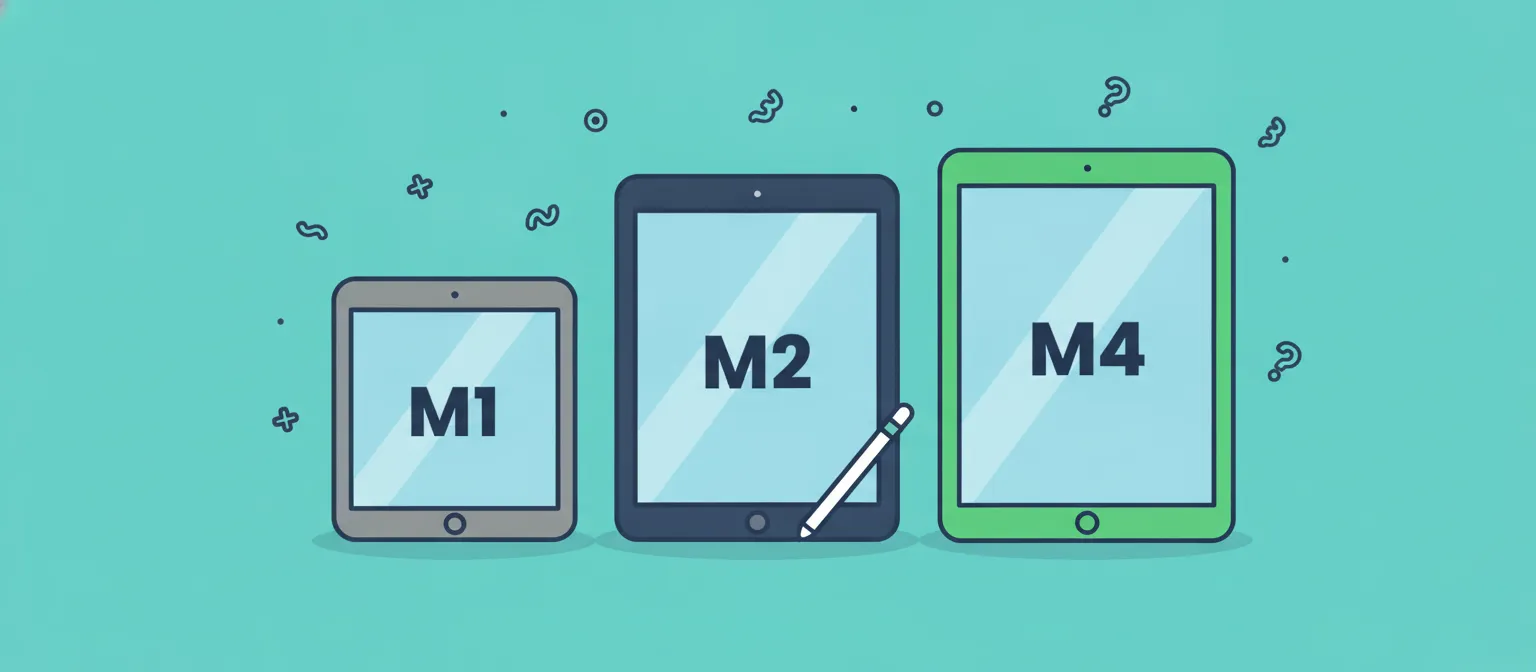
Refurbished iPad Pro: Which Generation to Buy in 2026
For most buyers in 2026, the best refurbished iPad Pro is the M2 (2022) in 256GB Wi-Fi, which lands around $536 and gives you a fast chip, a 120Hz display and years of iPadOS support for hundreds less than a new model. Step up to the M4 (2024) only if you specifically need its Ultra Retina XDR OLED screen, the kind of upgrade that matters for photo, video and pro illustration work. The older M1 (2021) is the budget play, starting near $381, and still handles everyday tablet work with ease.
According to RefurbMe's release tracking, a new iPad Pro takes about 105 days on average to reach the refurbished market after launch (as of June 2026), so each generation becomes a refurbished option within a few months of its successor arriving (iPad Pro refurbished stats).
Quick verdict
Best value for most people: refurbished iPad Pro M2 (2022), 256GB Wi-Fi, around $536. Best display: M4 (2024) OLED, from around $734. Tightest budget: M1 (2021), from around $381. Compare live refurbished iPad prices before you buy, since stock and pricing shift weekly.
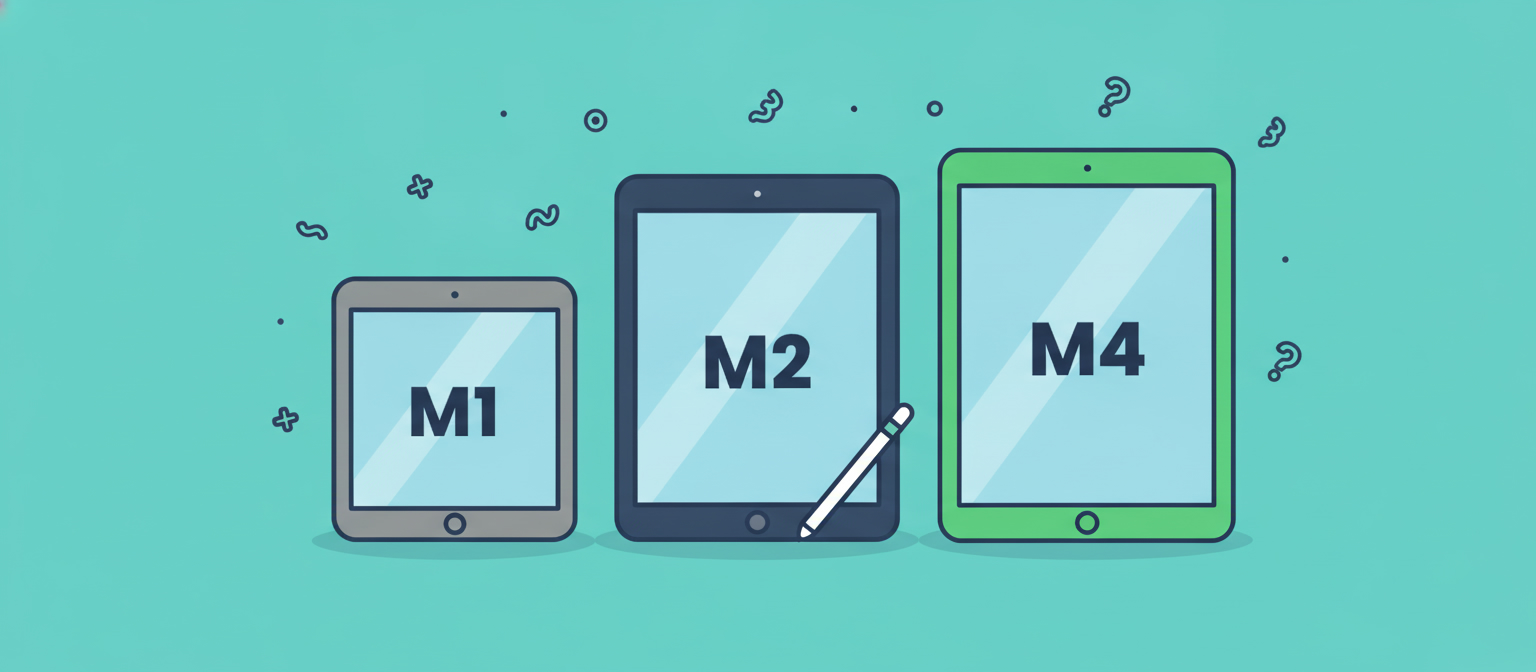
The best refurbished iPad Pro for most buyers in 2026
The iPad Pro line splits into four meaningful tiers on the refurbished market: the M4 (2024) with its OLED display, the M2 (2022), the M1 (2021), and the older 2018 and 2020 models that ran on Apple's A-series and first Intel-rivalling silicon. With the M5 iPad Pro now the current flagship, every earlier generation has dropped in price, and the gap between them is mostly about display technology and chip headroom rather than core usability.
The M2 (2022) sits in the value sweet spot. It uses the same boxy design as the M4, supports the Apple Pencil hover feature, runs the current iPadOS, and pairs a fast 8-core chip with a smooth 120Hz ProMotion display. On the refurbished market it costs a fraction of what the M4 commands, which makes it the default recommendation for students, note-takers, and anyone using an iPad as a couch-and-coffee-shop computer.
You should only pay the M4 premium if the display is your reason for buying. The M4's tandem OLED panel is genuinely better for color-critical work, and its chip has real headroom for heavy video timelines. For everyone else, that money is better kept in your pocket or spent on more storage.

128GB storage
Space Gray
2022 release

128GB storage
Silver
2022 release

128GB storage
Silver
2022 release
The generations at a glance: M4 vs M2 vs M1 vs 2018/2020
Here is how the refurbished iPad Pro generations compare on the specs that actually change the buying decision. All prices below are live starting prices from RefurbMe's refurbished iPad listings, checked in June 2026, and they move as stock turns over.
| Generation | Year | Chip | Display | Refurbished from |
|---|---|---|---|---|
| iPad Pro M4 | 2024 | M4 | Ultra Retina XDR OLED, 120Hz | around $734 (11"), $775 (13") |
| iPad Pro M2 | 2022 | M2 | mini-LED (12.9") / LCD (11"), 120Hz | around $490, 256GB Wi-Fi $536 |
| iPad Pro M1 | 2021 | M1 | mini-LED (12.9") / LCD (11"), 120Hz | around $381 |
| iPad Pro 2018/2020 | 2018-2020 | A12X / A12Z | LCD, 120Hz | varies, often under $350 |
The pattern is clear: each step back in generation drops the price meaningfully while keeping the ProMotion 120Hz display that defines the Pro line. The single biggest jump in capability is the M4's OLED screen, which arrived in 2024 and is the only generation that abandons the older LCD and mini-LED panels. For a deeper roundup across the whole tablet line, see our guide to the best refurbished iPads.
Current refurbished prices by generation
Refurbished iPad Pro pricing in 2026 is shaped by two forces: the arrival of the M5 flagship pushing older stock down, and Apple adding the M4 iPad Pro to its own Certified Refurbished store in April 2026 (the 11-inch started at $759, down from $999 new, per MacRumors). That listing helped set a price floor that third-party refurbishers now sit beneath.
On the open refurbished market, the cheapest M4 11-inch units start around $734, with 13-inch models from about $775. The M2 (2022) generation starts near $490, with the popular 256GB Wi-Fi configuration around $536. The M1 (2021) generation is the value floor, with 11-inch units from about $381. Across all of these, Apple's own Certified Refurbished iPad store is the trust benchmark, but third-party sellers usually undercut it.
Prices move weekly
Refurbished iPad Pro stock turns over fast, so the floor on any given day depends on what sellers have in inventory. Always check the live refurbished iPad comparison before buying, and set a price alert if the configuration you want is out of stock.
When you compare sellers, lead with the marketplaces that combine deep stock and strong buyer protection. Back Market is the largest dedicated refurbished marketplace and usually holds the broadest iPad Pro inventory across generations. Gazelle is a strong second for US buyers, often carrying the cheapest M1 and M2 units. Amazon Renewed and Apple's own refurbished store round out the safe options, with Apple acting as the price-and-trust ceiling rather than the cheapest route.
One thing worth understanding about refurbished pricing is why it moves the way it does. A new generation launch, like the M5 in late 2025, pulls trade-ins and returns of the previous model into the refurbished channel, which temporarily floods supply and pushes prices down. That is why the M4, only a year old, is already available refurbished for hundreds below its launch price. The flip side is that the most popular configurations, usually 256GB Wi-Fi, sell out fastest at the lowest prices, so the headline floor on a given day may be a less common storage or color option. Comparing across several sellers at once is the only reliable way to catch the genuine deals before they disappear.
Display: OLED vs mini-LED vs LCD, what actually matters
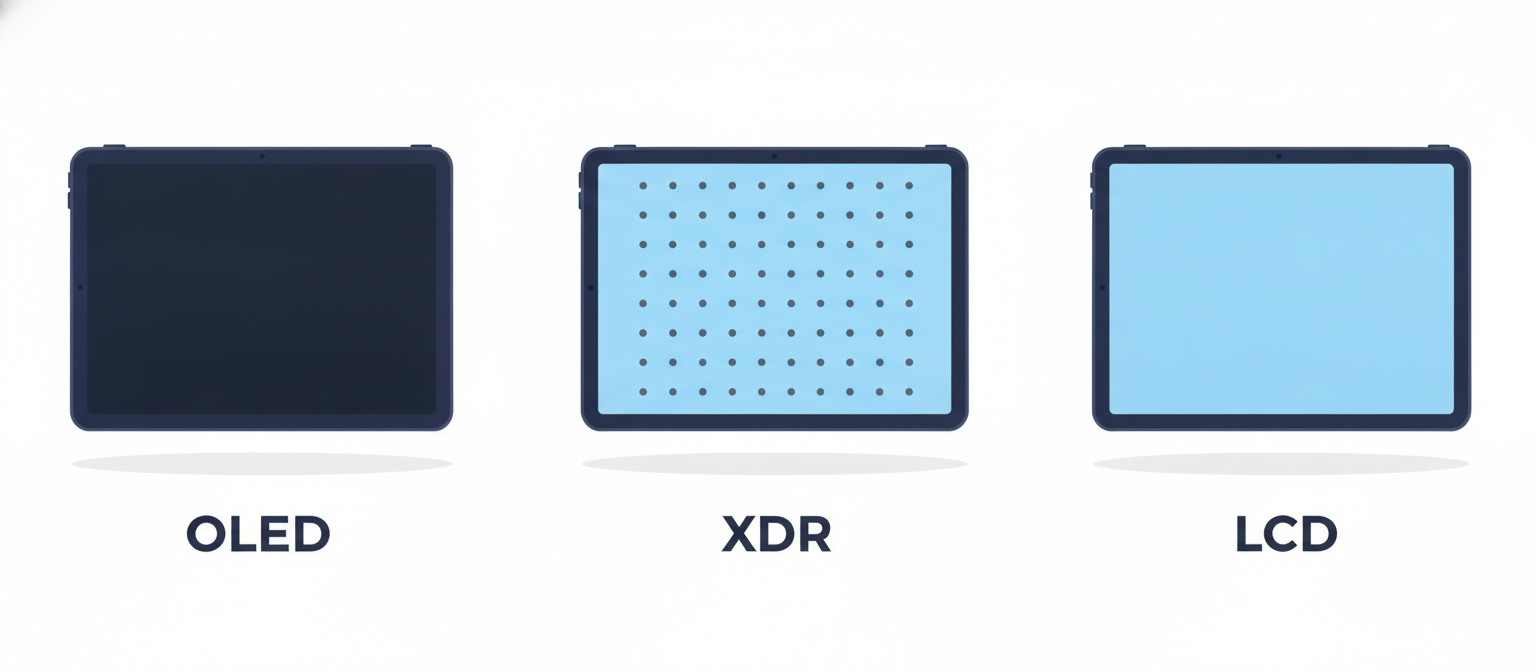
The display is the clearest dividing line between iPad Pro generations, and it is the single feature worth paying up for if it matches your work. The M4 (2024) introduced the Ultra Retina XDR display, a tandem OLED panel that stacks two OLED layers for higher full-screen brightness and true per-pixel contrast. Blacks are genuinely black, and HDR content has more punch than any earlier iPad.
The 12.9-inch M2 (2022) and M1 (2021) models use a mini-LED Liquid Retina XDR display, which delivers excellent contrast through thousands of local dimming zones. It is not OLED, but in normal use the difference is subtle, and mini-LED still looks superb for video and photos. The 11-inch M2 and M1 use a standard LCD, which is sharp and color-accurate but lacks the deep contrast of the larger models.
Every generation here runs ProMotion at up to 120Hz, so scrolling, Apple Pencil latency, and general smoothness feel the same across the lineup. If you do color-critical photo or video editing, the M4 OLED is worth the premium. If you mostly browse, take notes, and watch video, a mini-LED M2 gives you most of the experience for far less.
Chip performance: how much faster is M4 than M2 and M1
In real-world iPad use, the M1, M2 and M4 all feel fast, because iPadOS and the apps most people run rarely tax even the oldest of the three. The M1 (2021) already matched contemporary laptops in single-core speed, and it still launches apps, multitasks, and handles Apple Pencil work without hesitation in 2026.
The M2 (2022) adds roughly 15 percent more performance over the M1 and a faster GPU, which shows up in heavier creative apps and demanding games rather than in everyday tasks. The M4 (2024) is the real leap: a new architecture, more GPU cores, and hardware-accelerated ray tracing, which matters most for 4K video timelines, large RAW photo libraries, and pro-grade illustration.
For note-taking, browsing, streaming, and document work, any of the three is overkill in the best way. The chip should not be your deciding factor unless you edit video or run pro creative software daily, in which case the M4 earns its price.
It helps to put the jumps in perspective. Apple itself measured the M5 generation at up to 5.6 times faster AI performance than the M1, which tells you how much headroom the newer chips carry, but it also tells you the M1 is still a capable machine that simply lacks the latest acceleration. In day-to-day terms, the difference between an M1 and an M4 shows up only when you push the device hard: scrubbing a 4K timeline, exporting large video files, or running on-device AI features. If your workload never reaches that ceiling, the extra silicon sits idle, and you are paying for performance you will not feel.
iPadOS update longevity by generation
Apple supports iPads with software updates for a long time, which is a major reason buying an older iPad Pro refurbished still makes sense. The M1 (2021) and M2 (2022) both run Apple Silicon, the same chip family as current iPads, so they receive the latest iPadOS features alongside new models and should keep getting major updates for several more years.
The M4 (2024) has the longest runway of the three, with the most years of guaranteed updates ahead of it, which partly justifies its higher price for buyers who keep a tablet a long time. The older 2018 and 2020 iPad Pro models, built on A-series chips, are closer to the end of their update window, so they are best treated as budget secondary devices rather than long-term primary tablets.
As a rule of thumb in 2026, an M1 or newer iPad Pro is a safe long-term buy on software support, while pre-2021 models are value buys for lighter, shorter-term use. Our guide to the best places to buy a refurbished iPad covers which sellers are most reliable for long-term value.
Storage, cellular and battery: how to spec your iPad Pro
Storage is the spec most people get wrong. The base 128GB fills up quickly once you add offline video, large note libraries, and pro apps, so 256GB is the configuration we recommend for most buyers and the reason the M2 256GB Wi-Fi is our top pick. Stepping to 512GB or 1TB only makes sense for video editors and heavy media users.
Cellular is worth the premium only if you genuinely need internet away from Wi-Fi and do not want to tether to your phone. For most people, a Wi-Fi-only iPad Pro plus an occasional phone hotspot is cheaper and just as practical. On the refurbished market the Wi-Fi versions are also more common and tend to be the better value.
Battery is the one spec you cannot see on a listing, so it depends on the seller's grading and testing. Reputable refurbishers test and certify battery health before resale, which is exactly why buying from a vetted marketplace matters more than chasing the absolute lowest price.
What to check before buying refurbished
Before you commit to any refurbished iPad Pro, run through a short checklist so you know what you are getting. The grade, the warranty, and the return window matter as much as the headline price. The same checklist applies to any secondhand unit, so see how to buy a used iPad for the full walkthrough.
- Condition grade: Look for "Excellent" or Apple's Certified Refurbished standard if you want a near-new finish; "Good" grades save money but may show light wear.
- Battery health: Confirm the seller tests and certifies battery condition, since a worn battery is the most common hidden flaw.
- Screen and Pencil support: Check the listing matches the generation you want, especially the display type (OLED, mini-LED, or LCD) and Apple Pencil compatibility.
- Warranty: A minimum 12-month warranty is the standard to expect from a reputable refurbisher.
- Return window: A 14-day or longer return window lets you verify the device in person before you are locked in.
Avoid no-warranty listings
The biggest risk with refurbished tablets is buying from a seller with no warranty or return policy. Stick to certified refurbishers, and use a comparison tool that shows warranty and condition alongside price so you are never comparing on price alone.
Where to buy a refurbished iPad Pro safely
The safest way to buy a refurbished iPad Pro is to compare certified refurbishers side by side rather than committing to the first listing you find. RefurbMe aggregates live offers across the major sellers so you can sort by price, condition, and warranty in one place.
Back Market is the largest dedicated refurbished marketplace and is a strong first stop for breadth of iPad Pro stock and buyer protection. Gazelle is a reliable second option for US buyers, frequently holding the cheapest M1 and M2 units. Amazon Renewed offers convenience and familiar returns, while Apple's Certified Refurbished store is the trusted benchmark for fit and finish, even though it rarely has the lowest price.
If you are still weighing the Pro against the lighter, cheaper alternative, our iPad Air vs iPad Pro comparison breaks down who actually needs the Pro features.
Compare refurbished iPad Pro prices
See live prices across Back Market, Gazelle, Amazon Renewed and Apple Certified Refurbished in one place.
Compare iPad Pro dealsFAQ
Last updated: Jul 14, 2026 · First published: Jun 25, 2026


