


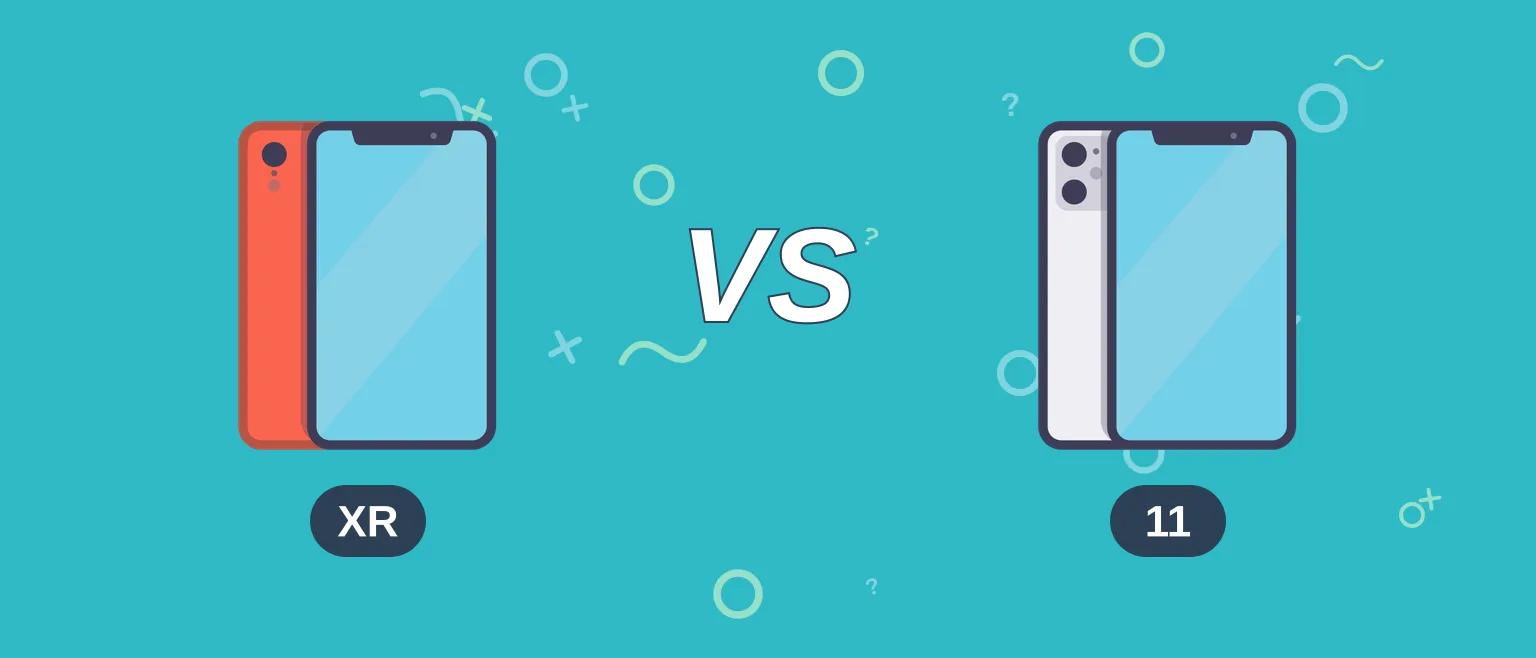
Buy the iPhone 11 if you want a phone that is still on Apple's update list. Buy the iPhone XR only if you want to spend as little as possible right now.
The two phones are near twins physically: the same 6.1-inch Liquid Retina LCD, the same 150.9 x 75.7 x 8.3 mm shell, the same 194 g. What separates them is software life and cameras. The iPhone 11 runs iOS 27, released on September 14, 2026; the iPhone XR stopped at iOS 18 and gets neither iOS 26 nor iOS 27. The 11 also adds a second, ultra-wide lens, Night mode, a 12MP front camera in place of the XR's 7MP, and an IP68 rating against the XR's IP67.
The price advice flipped this year. Refurbished iPhone XR listings on RefurbMe start at $122 and iPhone 11 listings at $134 (checked July 29, 2026), so the older phone is the cheaper one again, by roughly the cost of a decent case. That gap is small enough that for most buyers it does not outweigh the two major iOS releases the XR has already been cut from. Read on for the specification-by-specification breakdown.
Table of contents
- iPhone XR vs. iPhone 11 at a glance
- What do the iPhone XR and iPhone 11 cost refurbished in 2026?
- Reasons to choose the iPhone XR
- Reasons to choose the iPhone 11
- iPhone XR vs. iPhone 11: What are the differences?
- Which should you buy?
- FAQ
- Conclusion
iPhone XR vs. iPhone 11 at a glance
| Feature | iPhone XR | iPhone 11 |
|---|---|---|
| Release date | October 2018 | September 2019 |
| Display size | 6.1 inches | 6.1 inches |
| Display type | Liquid Retina IPS LCD | Liquid Retina IPS LCD |
| Resolution | 1792 x 828 pixels | 1792 x 828 pixels |
| Processor | A12 Bionic | A13 Bionic |
| Rear camera | Single 12MP (f/1.8) | Dual 12MP (f/1.8 wide, f/2.4 ultra-wide) |
| Front camera | 7MP (f/2.2), 1080p video | 12MP (f/2.2), 4K video |
| Night mode | No | Yes |
| Portrait mode | Yes | Yes |
| Video recording | 4K at 24/30/60 fps | 4K at 24/30/60 fps |
| Face ID | Yes | Yes |
| Water resistance | IP67 (up to 1 meter for 30 mins) | IP68 (up to 2 meters for 30 mins) |
| Battery life | Up to 16 hours of video playback | Up to 17 hours of video playback |
| Fast charging | 50% in 30 min, 20W adapter or higher (sold separately) | 50% in 30 min, 20W adapter or higher (sold separately) |
| Wireless charging | Yes | Yes |
| Storage options | 64GB, 128GB, 256GB | 64GB, 128GB, 256GB |
| Display brightness | 625 nits, Wide color (P3) | 625 nits, Wide color (P3) |
| Max OS compatibility | iOS 18 (final update, no iOS 26) | iOS 27 (released September 2026) |
| Colors | Black, White, Blue, Yellow, Coral, (PRODUCT)RED | Black, White, Green, Yellow, Purple, (PRODUCT)RED |
| Dimensions | 5.94 x 2.98 x 0.33 in 150.9 x 75.7 x 8.3 mm | 5.94 x 2.98 x 0.33 in 150.9 x 75.7 x 8.3 mm |
| Weight | 6.84 oz 194 g | 6.84 oz 194 g |
| SIM | Nano-SIM and eSIM | Nano-SIM and eSIM |
| Original price | $749 (64GB), $799 (128GB), $899 (256GB) | $699 (64GB), $749 (128GB), $849 (256GB) |
| Price (refurbished) | Starting at | Starting at |
What do the iPhone XR and iPhone 11 cost refurbished in 2026?
On the RefurbMe US comparison on July 29, 2026, refurbished iPhone XR listings started at $122 (Fair condition, 64GB, from Back Market) across 25 offers, and refurbished iPhone 11 listings started at $134 (Good condition, 64GB, from eBay Refurbished) across 35 offers. Compare like for like, in Good condition, and the two floors sit within $5 of each other.
Neither phone is scarce, which is the reason the gap is this narrow. According to RefurbMe's own tracking, an iPhone reaches the refurbished market a median of 82 days after Apple releases it (the Time-to-Refurb figure on our iPhone stats page, as of July 2026), and Apple sells a given iPhone for a median of 399 days before discontinuing it. Two phones that both left Apple's lineup years ago have had plenty of time to sink to the bottom of the market, and they have landed in the same place.
Two practical consequences:
- The XR's price advantage is not a reason on its own. Twelve dollars buys you a case. It does not buy back iOS 26 and iOS 27, both of which skip the XR.
- Condition grade moves the price more than the model does. A Fair XR and an Excellent iPhone 11 can be $40 apart, which is a bigger spread than the gap between the two models.
Prices move weekly as sellers restock, so treat those figures as a snapshot rather than a fixed rate. Both models are listed by Back Market, Gazelle, Amazon Renewed, eBay Refurbished, and Mac of All Trades, and you can see all of them side by side on our refurbished iPhone XR and refurbished iPhone 11 pages. If the budget is tighter still, read our roundup of cheap refurbished iPhones under $100.
Reasons to choose the iPhone XR

64GB storage
Black
64GB storage
Black
- Lower refurbished price, currently by about $12 at the floor.
- The same display as the iPhone 11, spec for spec.
- Good performance with A12 Bionic chip for everyday tasks.
- Wide range of color options.
- Decent single rear camera for everyday photography.
Reasons to choose the iPhone 11

64GB storage
Black
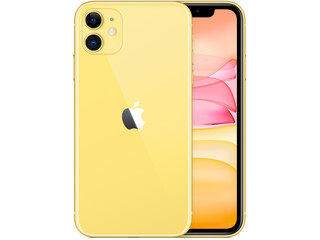

- Runs iOS 27, released September 14, 2026 (the iPhone XR gets neither iOS 26 nor iOS 27).
- Better camera system with dual lenses (wide and ultra-wide).
- Night mode for low-light photography.
- Faster A13 Bionic chip and 4GB RAM vs. 3GB.
- Higher water resistance (IP68 vs. IP67).
- Slightly longer battery life.
iPhone XR vs. iPhone 11: What are the differences?
The two phones share a size, a screen, and a charging rating. They part company on the chip, the cameras, the water rating, and the software runway. Section by section:
Design
When comparing the designs of the iPhone XR and iPhone 11, you'll notice several similarities and subtle differences. Both models feature a sleek, modern look with an edge-to-edge Liquid Retina display measuring 6.1 inches, offering vibrant colors and sharp detail. The devices are nearly identical in size and weight, making them comfortable to hold and use with one hand.
The iPhone XR is available in six vibrant colors: Black, White, Blue, Yellow, Coral, and (PRODUCT)RED. This colorful lineup appeals to anyone who wants a pop of personality in their device.
The iPhone 11, also available in six colors, offers a slightly different palette: Black, White, Green, Yellow, Purple, and (PRODUCT)RED. The introduction of Green and Purple gives it a fresher look for users who want something distinct.
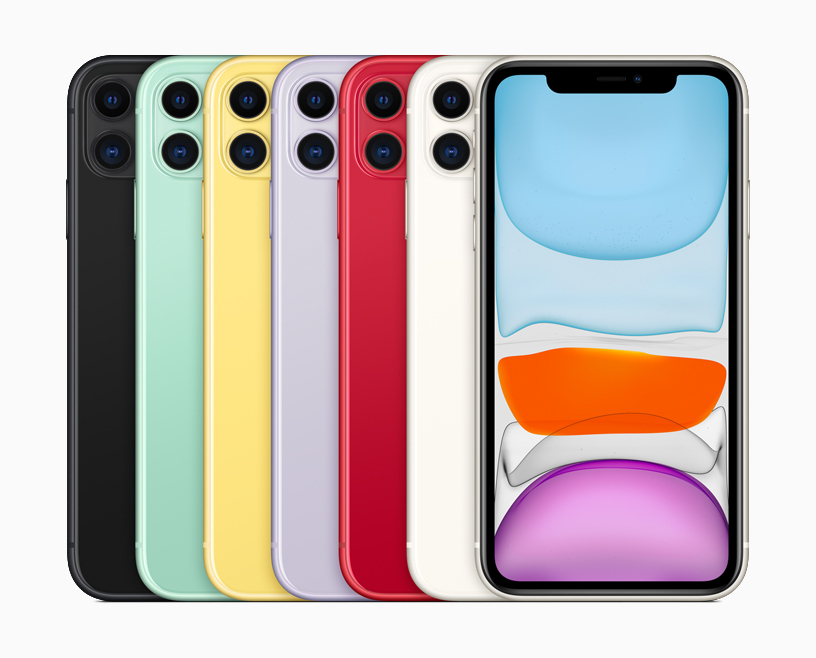
iPhone 11 colors Image by: Apple
Both phones feature an aerospace-grade aluminum frame and durable glass back. However, the iPhone 11 has a more robust design with improved water and dust resistance, rated at IP68 compared to the iPhone XR's IP67. This means the iPhone 11 can withstand submersion in water up to 2 meters for 30 minutes, whereas the iPhone XR can handle up to 1 meter for the same duration.
The rear camera module on the iPhone 11 is also slightly larger, owing to the inclusion of the ultra-wide lens.
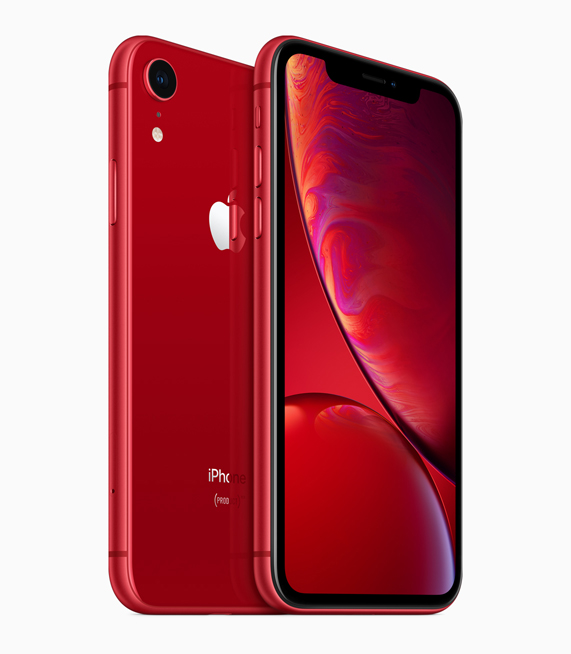
Red iPhone XR Image by: Apple
Display
Both models feature a 6.1-inch Liquid Retina IPS LCD display with a resolution of 1792 x 828 pixels and a pixel density of 326 ppi. Both phones deliver vibrant colors, sharp text, and detailed images for a comfortable viewing experience.
The Liquid Retina technology used in both devices supports accurate color reproduction and the True Tone feature. True Tone adjusts the display's white balance to match surrounding lighting conditions, making the screen easier to read in various environments.
The screens are identical. Apple's own specification sheets give the two phones the same panel: 625 nits maximum brightness, a 1400:1 contrast ratio, Wide color (P3), True Tone, and Haptic Touch on both. Apple has never published a brightness or color-gamut difference between them.
Neither phone uses OLED, so both lack the deep blacks of the iPhone 11 Pro and later models. If the screen is what you care about, neither of these is the phone to buy, and the decision comes down to the sections below.
Performance
The iPhone 11 packs a more powerful punch with its A13 Bionic chip compared to the iPhone XR's A12 Bionic. Both chips handle everyday tasks (web browsing, social media, streaming) without issue, but the A13 Bionic's advantage becomes noticeable when running demanding applications or graphics-intensive games.
👉 Learn more: 21 Best Classic and Old iPhone Games You Can Still Play
The A13 Bionic also enhances machine learning, enabling more advanced AR experiences, faster Face ID recognition, and better battery efficiency. The iPhone 11 has 4GB of RAM compared to the iPhone XR's 3GB, which contributes to smoother multitasking when switching between multiple apps. If you're weighing a further upgrade, see how the iPhone 11 stacks up in our iPhone 11 vs. iPhone 13 comparison.
One more thing the A13 buys you, seven years on: Apple extended its iOS 27 CPU scheduler work back to the iPhone 11 generation, so the 11 got faster with the September 2026 update while the XR sits still on iOS 18.
Battery life
Both the iPhone XR and iPhone 11 deliver solid all-day battery life with moderate use. The iPhone 11 holds a slight advantage, rated for up to 17 hours of video playback compared to the XR's 16 hours.
In real-world usage, this difference is marginal; both phones will typically need a charge by the end of a heavy day.
Charging is a wash. Apple's specification pages give the XR and the 11 the same line: fast-charge capable, up to 50% in 30 minutes with a 20W adapter or higher, sold separately. There is no 18W-versus-20W split between these two phones. (The 18W figure that circulates belongs to the iPhone 11 Pro and Pro Max, which shipped with an 18W USB-C adapter in the box. Neither the XR nor the standard 11 did.)
Both also list Qi wireless charging, and neither has MagSafe, which arrived with the iPhone 12. Apple no longer includes a power adapter with either model, so budget for a 20W charger if you do not already own one.
👉 Learn more: Best MagSafe Accessories for Your iPhone
Cameras
The cameras are the biggest hardware gap between the two phones, and the main reason to spend the extra $12.
The iPhone XR features a single 12MP wide lens, while the iPhone 11 boasts a dual-lens setup with a 12MP wide lens and a 12MP ultra-wide lens. The ultra-wide lens on the iPhone 11 enables expansive landscape shots and group photos that simply are not possible on the XR.
The iPhone 11 also introduces Night mode, which switches on by itself in dim rooms and produces brighter, cleaner frames. The XR has no equivalent and gets noticeably noisy indoors after sunset. Apple's spec sheet also gives the 11 Deep Fusion on the wide lens, which the XR does not list.
Both phones offer Portrait mode with Depth Control, but Apple lists three Portrait Lighting effects on the XR's rear camera against six on the iPhone 11's. The 11 also has an ultra-wide lens feeding it a second view of the scene, so its edge detection around hair and glasses holds up better.
The front camera is the difference most buyers actually feel. The XR's TrueDepth camera is 7MP and records 1080p at up to 60 fps. The iPhone 11's is 12MP and records 4K. If you take video of yourself, that is a generational jump, not a nudge. Video from the rear camera is closer: both shoot 4K up to 60 fps, but Apple lists extended dynamic range up to 30 fps on the XR and up to 60 fps on the 11.
Software support
This is where the two phones diverge most sharply in 2026. The iPhone XR received its final major update with iOS 18 and will not be compatible with iOS 26 (released fall 2025) or any future iOS versions. The iPhone 11 runs iOS 27, Apple's current major release since September 14, 2026. iOS 27 supports every device iOS 26 supported, dropping nothing, so the iPhone 11 is on the list.
The upgrade is not a token one either. Apple says apps launch up to 30% faster in iOS 27, a figure it measured on an iPhone 11 Pro Max, and it extended its CPU scheduler optimization back to the iPhone 11 generation specifically. That makes a 2019 phone measurably quicker on a 2026 release.
Apple has historically supported iPhone models for five to six years from their launch date. The XR launched in October 2018 and hit that ceiling with iOS 18 in 2024, six years of support. The iPhone 11 launched in September 2019 and is now in its seventh year of support, which is longer than typical; Apple extended coverage to enable iOS 26 compatibility. For a deeper look at Apple's support timeline, see our guide on how long Apple supports iPhones.
In practical terms, iPhone 11 owners continue to access the latest iOS features (though not Apple Intelligence, which requires an iPhone 15 Pro or later), security patches tied to the latest iOS, and full App Store compatibility. iPhone XR owners will still receive security updates under iOS 18 for some time, and the vast majority of existing apps will continue to function, but the gap will widen with each passing year.
If software longevity matters to your decision, the iPhone 11 is the clear choice.
Which should you buy?
Choose the iPhone 11 if:
- You want a phone that runs iOS 27 now, with security and feature updates behind it.
- You shoot photos or video: the ultra-wide lens, Night mode, and the 4K front camera are real upgrades, not spec-sheet ones.
- You do anything remotely active or outdoorsy: IP68 means a genuine 2-meter submersion rating versus the XR's 1-meter IP67.
- You plan to keep the phone for two or more years and want continued App Store compatibility.
Choose the iPhone XR if:
- Your budget is genuinely fixed and the $12 the XR saves at the floor is the difference between buying and not.
- Your daily use is limited to calls, messaging, streaming, and social media, tasks the A12 Bionic handles without strain.
- You are comfortable running iOS 18 and do not need features exclusive to iOS 26 and later.
- You want Coral or Blue, which are XR-only colors.
For most buyers in 2026, the iPhone 11 is still the phone to get. The XR's price advantage came back this year, but it came back as roughly $12 at the floor, and $12 does not buy iOS 26, iOS 27, an ultra-wide lens, Night mode, or a 4K front camera.
FAQ
Conclusion
Buy the iPhone 11. It runs iOS 27, it has the second lens and Night mode, its front camera shoots 4K, and its IP68 rating is a real 2-meter one. The XR reclaimed the price crown this year, but by about $12 at the floor, which is not enough to give all of that up.
Two things the specification pages settle: the iPhone 11 does not have a brighter or wider-gamut screen than the XR (both are 625-nit P3 panels), and it does not charge faster (both are rated 50% in 30 minutes with a 20W adapter or higher).
If you are already considering an iPhone 11, compare it against the next step up: our iPhone 11 vs. iPhone 13 and iPhone 11 Pro vs. iPhone 12 guides show whether a small extra spend buys 5G and a better camera.
To price either model, use RefurbMe. We compare refurbished iPhones across Back Market, Gazelle, Amazon Renewed, eBay Refurbished, Mac of All Trades, and the Apple Store, with the condition grade and warranty on every listing so you can see what you are actually paying for. For a wider look at where to shop, see our guide to the best places to buy refurbished iPhones in 2026.
Check all current deals in real time below.


64GB storage
Black
64GB storage
Black
Happy shopping!
Explore more comparisons:
Last updated: Sep 15, 2026 · First published: Jul 9, 2024
