
The best time to buy an iPhone is the four weeks after Apple's September keynote, or Black Friday week in late November. If you are buying refurbished, the sweet spot sits later than the keynote itself: RefurbMe's own tracking puts the median gap between an Apple release and the first refurbished stock at 82 days, which lands the post-launch supply wave in late November and December rather than in October.
TL;DR
Two windows move iPhone prices: the weeks right after Apple's September announcement, and Black Friday. Apple itself rarely cuts the outgoing model, so the real drop shows up in the refurbished market, where a one-year-old iPhone 16 starts at $492 against $799 new. Refurbished stock from a September launch starts appearing in late November and deepens through December. The worst time to buy is August.
RefurbMe measures that lag as Time-to-Refurb: the median number of days between Apple releasing a model and the first time we record it in stock refurbished. Across the iPhone family it is 82 days (as of August 2026, per RefurbMe stats). That is the fastest of any Apple family we track, well ahead of the MacBook Air at 99 days, the iPad at 115 and AirPods at 391. A phone announced in early September is therefore usually buyable refurbished around the end of November, which is why the calendar below treats December, not October, as the refurbished buyer's month.
When is the best time of year to buy an iPhone?
There are two windows worth planning around, and they serve different buyers.
Late September through October is the strongest window if you want a current or outgoing model new. Apple announces in early September, ships about ten days later, and retailers and carriers spend the following weeks clearing the previous generation with promotions and trade-in offers.
Black Friday week in late November is the strongest window for carrier deals and retailer promotions. Macworld's buying guide, updated 10 July 2026, puts it plainly: "the biggest savings are typically available during major sales events such as Amazon Prime Day (usually in July and October, and occasionally in March) and Black Friday in late November."
Early December is the quiet third window, and it exists only for refurbished buyers. The phones people trade in during the September upgrade rush need to be graded, repaired and listed before they reach you, and that pipeline runs about 82 days. You can compare refurbished iPhone prices across every seller in one place rather than watching each store separately.
The worst time to buy is August and the first days of September, when a new lineup is weeks away and nothing has repriced yet.
Apple's iPhone cycle, and why September resets every price
Apple has run the same annual pattern for years: announce in the first half of September, open preorders that Friday, ship the following Friday. The iPhone 17 followed it exactly. Apple announced it on 9 September 2025 at $799 with 256GB of storage, opened preorders on 12 September and put it on sale on 19 September.
That single event repositions the entire ladder. The new model takes the top price slot, the outgoing model slides down the lineup, and everything older starts moving through trade-in programs toward the resale and refurbished market. Nothing else in the Apple calendar moves iPhone prices with the same force.
What 2026 is expected to change
The pattern has split, which matters if you are timing a purchase this year. MacRumors reported on 30 July 2026 that Apple is expected to unveil the iPhone 18 Pro, iPhone 18 Pro Max and a foldable iPhone in September, while "the regular iPhone 18, a lower-end iPhone 18e, and the iPhone Air 2 are not expected to be announced until around March 2027, as part of a new split-up launch strategy." 9to5Mac made the same call on 25 July 2026, writing that "only the iPhone 18 Pro, iPhone 18 Pro Max, and all-new foldable iPhone will launch this September."
Apple confirmed the split on 9 September 2026. At its Surprise and Shine event it unveiled the iPhone 18 Pro, the iPhone 18 Pro Max and the iPhone Duo, its first foldable. The two Pro models went on sale 18 September; the Duo follows on 23 October. No standard iPhone 18 or iPhone 18e was announced, which leaves standard-model buyers waiting for a spring 2027 reset while Pro buyers keep the September rhythm. The underlying rule is unchanged. The reset happens when Apple announces, whenever that lands. For what the new models mean further down the line, see when a refurbished iPhone Duo or 18 Pro will appear. If you already own the outgoing Pro, our iPhone 17 Pro versus iPhone 18 Pro guide walks through whether upgrading refurbished makes sense yet.
What actually happens to prior generation prices after a launch
Here is the part that catches most buyers out: Apple does not slash the outgoing model when a new one arrives.
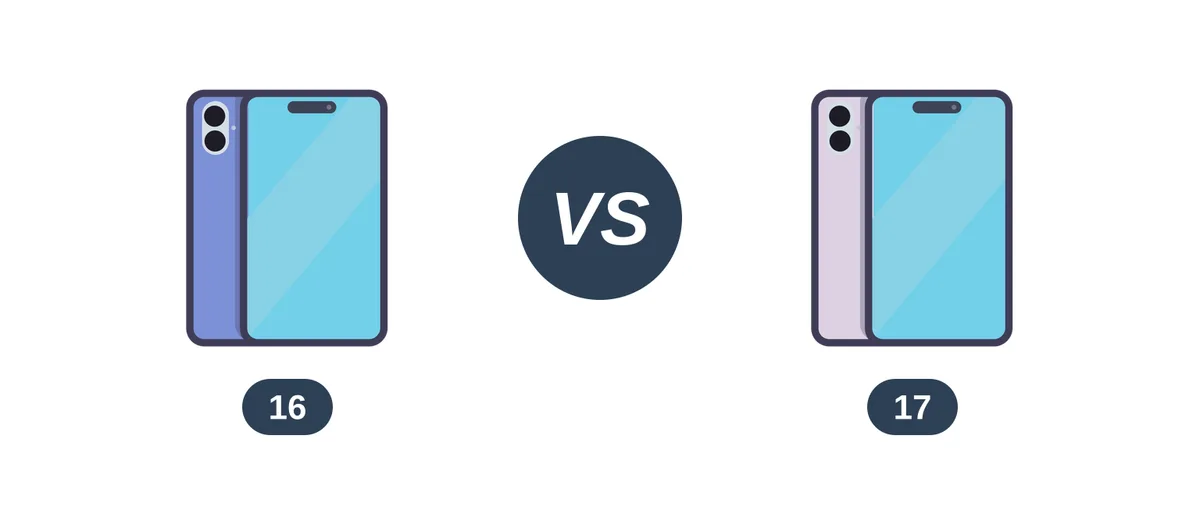
Almost a year after the iPhone 17 shipped, Apple still sells the iPhone 16 and iPhone 16 Plus. The iPhone 16 product page lists 128GB at $829.00 to connect to a carrier later, with a footnote knocking $30 off when you activate with T-Mobile or Verizon (Apple states the discount is not available for AT&T). That is the same $799 starting price the iPhone 16 launched at in September 2024. Meanwhile the iPhone 17 sits at the same $799 or $829 with double the base storage, so the outgoing model quietly becomes worse value instead of becoming cheaper.
The drop is real, but it happens somewhere else. On RefurbMe today a refurbished iPhone 16 starts at $492, against the $799 it launched at, a 38% discount. Apple's own store is the trust benchmark for condition and warranty, not the place the post-launch discount appears.
So if your plan is "wait for Apple to cut the price of last year's iPhone," you are waiting for something that does not come. The plan that works is to wait for the resale market to absorb the upgrade wave, then buy the outgoing model refurbished. Our guide to whether the refurbished iPhone 17 is worth it walks through the same trade-off on the current model.
How long refurbished iPhone prices take to drop after a launch
Time-to-Refurb answers this precisely. It is the median number of days between Apple's release of a model and the first time RefurbMe records that model in stock refurbished, measured across every iPhone in the family.
For iPhone, that figure is 82 days (as of August 2026, per RefurbMe stats). The most recent launch tracked close to it. The iPhone 17 went on sale on 19 September 2025, and the first refurbished iPhone 17 our tracker recorded went live on 25 November 2025, roughly ten weeks later, listed by Gazelle. Supply then thickened through December and the following quarter as more trade-ins cleared grading.
Why iPhone moves faster than anything else Apple makes comes down to volume. Phones are traded in at higher rates and in far larger numbers than laptops or tablets, so refurbishers reach sellable stock sooner. On the same live medians, a MacBook Air takes 99 days, an iPad 115, and AirPods 391. That longer lag is why the best time to buy a MacBook sits on a different calendar entirely.
Two practical consequences follow. First, if a new iPhone was announced within the last two months, refurbished stock of it will be thin and expensive, so buy the generation below instead. Second, the deepest refurbished discounts are never about the newest phone at all, which is what the next section shows.
One caveat matters here. Time-to-Refurb measures when the first unit appears, not when prices bottom out. The iPhone 17 has been listed refurbished since late November 2025 and still carries only a 16% discount today, because a model this new stays scarce and expensive until the trade-in volume behind it builds.
Refurbished iPhone prices by model age
Every figure below is the live starting price on RefurbMe on 13 August 2026, in the US market, alongside the discount shown against that model's new reference price.
| Model | Released | Refurbished from | Discount vs new | Live offers |
|---|---|---|---|---|
| iPhone 17 | September 2025 | $674 | 16% | 35 |
| iPhone 16 | September 2024 | $492 | 38% | 58 |
| iPhone 15 | September 2023 | $366 | 54% | 59 |
| iPhone 14 | September 2022 | $250 | 69% | 58 |
| iPhone 13 | September 2021 | $160 | 81% | 50 |
Read the discount column as a depreciation curve. The steepest single step is from year one to year two, where the discount roughly doubles from 16% to 38%. After that each additional year adds progressively less, which is why a two- or three-year-old iPhone is usually the value pick rather than the oldest phone on the shelf.
Across every iPhone RefurbMe has ever tracked, the family median Refurb Discount is 80% off the original release price (as of October 2026, per RefurbMe stats). That figure spans models going back a decade, so it describes the family, not any phone you would buy today. Never read it as "save 80% on a current iPhone." For a current model, use the per-model discounts in the table above.
If your budget is the constraint rather than the calendar, our roundup of the best refurbished iPhones to buy ranks the models by value, and cheap refurbished iPhones under $100 covers the bottom of the ladder.

64GB storage
Black
64GB storage
Black
Black Friday or the post-launch window: which one wins?
Neither wins outright. It depends on what you are buying.
Buying new or on a carrier plan: the post-launch window usually wins. Between late September and the end of October, carriers push their most aggressive promotions on the outgoing model to clear inventory, and that is often bundled financing rather than a headline discount.
Buying new at retail: Black Friday usually wins. Late November is when third-party retailers discount unlocked hardware and carriers stack their best trade-in credits, per the Macworld guide cited above.
Buying refurbished: December usually wins. This is the counterintuitive one. Black Friday lands right at the edge of the Time-to-Refurb window rather than comfortably inside it. The first refurbished iPhone 17 in our tracker went live on 25 November 2025, three days before that year's Black Friday, and a catalogue that thin gives you almost no choice of storage, color or grade. The listings that make a generation genuinely cheap arrive over the following weeks.
The honest summary: if you want a phone in your hand before the holidays and you are buying new, take the post-launch or Black Friday window. If you are buying refurbished and can wait a few more weeks, December and January give you far more stock at lower prices.
When to sell or trade in your current iPhone
Everything above runs in reverse when you are the seller. The right moment to sell is before the keynote, not after it.
In the weeks before an announcement, your phone is still the newest example of its generation on the resale market and supply is normal. Within days of the announcement, every upgrader lists the same model at once, and that flood is exactly what produces the cheaper refurbished prices arriving 82 days later. You do not want to be selling into it.
Practically, that means listing or requesting quotes in August or the first days of September, before Apple takes the stage. Compare several buyback offers rather than accepting the first, since quotes for the same model and condition vary widely between services. Our guide to the best places to sell your iPhone covers the options, and Apple Trade In versus buying refurbished compares handing the phone back to Apple with selling it independently.
One more timing input: how much support life the phone has left. A model still years away from losing iOS updates holds resale value better, and how long Apple supports iPhones sets out the typical window.
The worst times to buy an iPhone
Four moments to avoid, in order of how much they cost you.
August and the first week of September. The single worst call. You pay full price for a phone that is weeks from being superseded, and you miss the repricing that follows. Macworld reaches the same conclusion, warning against buying "in the weeks leading up to Apple's September launch event."
Launch week itself. The new model carries no discount at all, and the outgoing model has not yet repriced in the resale market. Everything is at its most expensive simultaneously.
The first two months after a launch, if you want refurbished. You are inside the 82-day Time-to-Refurb window. Stock of the new model has not arrived yet, and the models below it have not absorbed the trade-in wave.
Any moment you are buying the outgoing model new at list price. As the iPhone 16 shows, Apple keeps the outgoing model at its original price. The same phone refurbished costs 38% less.
Month-by-month iPhone buying calendar
| Month | Verdict | Why |
|---|---|---|
| January | Buy refurbished | The December supply wave is fully listed and prices have settled |
| February | Buy refurbished | Stock is still deep and the holiday rush is over |
| March | Watch | A spring launch is possible under the reported split schedule |
| April | Buy refurbished | Post spring stock, no autumn pressure yet |
| May | Buy refurbished | Quiet month, prices stable |
| June | Neutral | Software gets announced, hardware prices do not move |
| July | Buy new on sale | Prime Day discounts land on retail stock |
| August | Wait | The worst month. A launch is weeks away |
| September | Pivot | Sell your old phone early in the month, then watch the reset |
| October | Buy new | Best window for the outgoing model new or on a carrier deal |
| November | Buy new | Black Friday promotions and trade-in credits peak |
| December | Buy refurbished | The launch wave has landed and the catalogue is deepening |
Where to buy once you have picked your moment
Timing only pays off if you compare sellers at the moment you buy, because the floor price moves between them constantly. As of 13 August 2026 RefurbMe lists 1,192 refurbished iPhone offers in the US market, starting at $89 for an iPhone SE 2.
- Back Market carries the deepest catalogue and holds the price floor on most current models, including the $492 iPhone 16 and the $674 iPhone 17. It is the first place to check.
- Gazelle is a strong second and currently lists 64 refurbished iPhone offers, including the cheapest iPhone 15 on the site at $366.
- Mac of All Trades and Amazon Renewed appear across the older models and occasionally undercut on a single storage or carrier configuration.
- eBay Refurbished, eBay's vetted certified program with graded conditions and a warranty, carries a small iPhone selection, five offers today. It is a comparison row rather than a first stop, and it is not the open eBay marketplace.
- Apple Certified Refurbished is the trust benchmark for condition and warranty, and Apple does list refurbished iPhone 16 stock, but it is rarely the cheapest option.
For a fuller breakdown of who to trust, see the best places to buy refurbished iPhones. If you are torn between two recent generations, iPhone 16 versus iPhone 17 works through the trade-off directly.
The most reliable way to catch the right moment is not to watch the calendar at all. Set a price alert on the model you want and let the drop find you.
Track Refurbished iPhone Prices
Compare live prices from Back Market, Gazelle, Amazon Renewed and more, and get alerted when your model drops.
Compare iPhone PricesFAQ
Last updated: Sep 11, 2026 · First published: Aug 13, 2026