

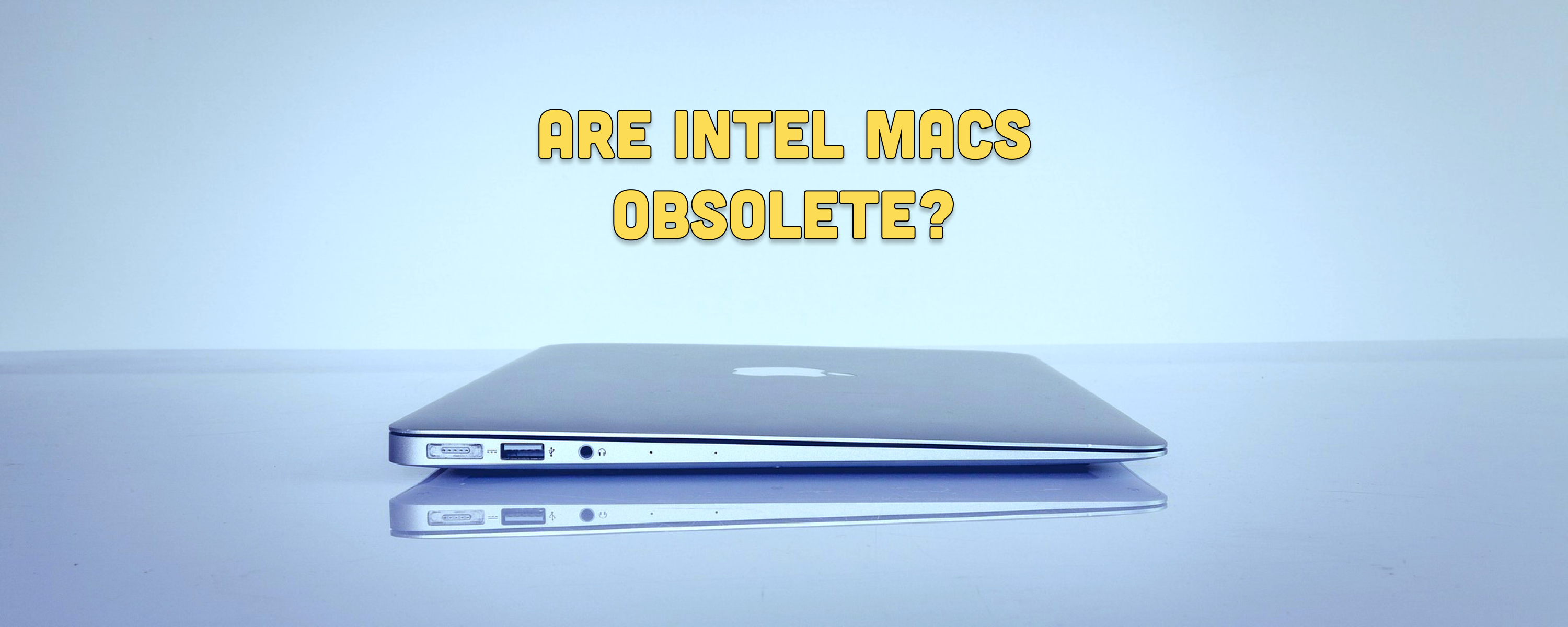
Apple’s transition from Intel processors to its own silicon chips is now nearly complete. At WWDC 2020, the company announced that Apple-designed chips would replace Intel across its Mac lineup. Six years later, that shift has reshaped the market for used and refurbished Macs. Here is what Intel Mac owners and prospective buyers need to know in 2026.

Table of contents
- How long will Apple support Intel Macs?
- How can the Apple Silicon transition affect you?
- Is buying an Intel Mac a good idea in 2026?
- How to know if your Mac has an Intel or an Apple Silicon processor
- Which Intel-based Macs are supported by macOS 26 Tahoe?
- FAQ
- Conclusion
How long will Apple support Intel Macs?
⚠️ It is now official: macOS 27 Golden Gate, announced at WWDC on June 8, 2026, is the first macOS version to drop Intel Mac support entirely. It is in developer beta now and arrives for everyone in fall 2026, running only on Apple silicon (M1 and later).
The current release, macOS 26 Tahoe (updated to 26.4 in March 2026), still runs on select Intel models. Apple says Intel Macs will keep receiving security updates for roughly three more years, but macOS 26 Tahoe is their last major version.
Apple used Intel processors in Macs from 2006 through 2023, when the last Intel Mac Pro was discontinued. Here is where things stand:
- macOS 26 Tahoe is the last major OS to support Intel Macs. You can still install it on supported models and receive feature and security updates through 2026.
- Security updates will continue until around 2029. Apple confirmed at WWDC 2026 that Intel Macs will receive security patches for approximately three more years on the macOS 26 branch.
- You can still switch later. If you buy a refurbished Intel Mac now at a steep discount, you can sell it and upgrade to Apple Silicon when you are ready.
👉 Related: 7 Best Refurbished MacBooks
How can the Apple Silicon transition affect you?
The shift from Intel to Apple Silicon affects the software you can run. Intel and Apple Silicon chips use different processor architectures, which means apps must be built specifically for each platform or rely on a translation layer.
👉 For a detailed breakdown, read our comparison of Apple’s M1 MacBook Pro vs. Intel MacBook Pro.
Most major developers have already released Apple Silicon-native versions of their apps. Some niche or enterprise tools, however, still depend on Intel compatibility. If your workflow relies on specialized software, check whether the developer has released a universal or Apple Silicon build before making a purchase decision.
What is happening with Rosetta 2?
Rosetta 2 is Apple’s translation layer that lets Apple Silicon Macs run apps originally built for Intel. It works in the background and, thanks to the raw power of M-series chips, performs well for most tasks.
However, starting with macOS 26.4 (March 2026), Apple now displays warnings when you open Rosetta-dependent apps. At WWDC 2026, Apple confirmed the timeline: macOS 27 Golden Gate is the final macOS to include Rosetta 2, and macOS 28 (2027) removes it. That means Intel-only apps will stop working on new OS versions unless developers update them.
For Intel Mac owners, the concern is different: as developers shift their focus entirely to Apple Silicon, fewer apps will receive Intel-compatible updates. Professional users running demanding workloads in video editing, 3D rendering, or data science may notice the gap sooner than casual users.
👉 Related: Are MacBooks Worth It?
Is buying an Intel Mac a good idea in 2026?
👉 Buying a refurbished Intel Mac in 2026 can still make sense if you need a machine for basic tasks, have a tight budget, or rely on specific Intel-only software.
Here are three scenarios where an Intel Mac remains a practical choice:
- You only need it for everyday tasks. Web browsing, email, document editing, and video calls run smoothly on Intel Macs with macOS 26 Tahoe.
- You use professional software that has not been ported to Apple Silicon. Some legacy enterprise or niche tools still require Intel. An affordable refurbished Intel Mac can serve as a dedicated workstation for those apps.
- You want to save hundreds of dollars. Intel Macs are significantly cheaper than their Apple Silicon equivalents, especially on the refurbished market.
Keep in mind that macOS 27 Golden Gate, arriving in fall 2026, does not support Intel, so you will be limited to macOS 26 Tahoe and its security patches going forward. For most basic users, that is a perfectly workable arrangement for the next three years or so.
Browse refurbished MacBook Pro models with an Intel chip on RefurbMe:

2.4Ghz Intel Dual-Core i5 2nd gen
4GB memory • Silver
2011 release

2.3Ghz Intel Dual-Core i5 7th gen
8GB memory • Space Gray
2017 release
2.3Ghz Intel Dual-Core i5 7th gen
16GB memory • Space Gray
2017 release
And here are refurbished MacBook Air models with Intel:

1.6Ghz Intel Dual-Core i5 5th gen
4GB memory • Silver
2015 release

1.3Ghz Intel Dual-Core i5 4th gen
4GB memory • Silver
2013 release

1.6Ghz Intel Dual-Core i5 5th gen
8GB memory • Silver
2015 release
These listings are available right now on RefurbMe, our comparison platform for refurbished Apple devices. Prices on Intel models are often 40 to 60 percent lower than comparable Apple Silicon machines.
👉 Related: How Long Do MacBooks Last?
If you are concerned about future software compatibility, think of an Intel Mac as a bridge device. Buy refurbished now, use it while prices on Apple Silicon Macs continue to drop, then upgrade when the time is right. You can also sell your old Mac to offset the cost of a new one.
How to know if your Mac has an Intel or an Apple Silicon processor
To check whether your Mac runs an Intel or Apple Silicon chip, follow these steps:
- Click the Apple logo in the top-left corner of your menu bar.
- Select About This Mac.
- In the window that appears, look for one of the following:
- Chip followed by Apple M1, M2, M3, M4, or M5 means you have Apple Silicon.
- Processor followed by an Intel Core name means you have an Intel Mac.
Which Intel-based Macs are supported by macOS 26 Tahoe?
macOS 26 Tahoe, released in fall 2025, is the last major macOS release to support Intel hardware. The list of compatible Intel models is narrower than previous versions:
- iMac: 2019 and later models
- iMac Pro: 2017
- MacBook Air: 2020 (the last Intel MacBook Air)
- MacBook Pro: 2018 and later Intel models
- Mac mini: 2018 and later Intel models
- Mac Pro: 2019 Intel model
Several features in macOS 26 Tahoe are exclusive to Apple Silicon, including certain Apple Intelligence capabilities and advanced on-device machine learning tasks. Intel Macs receive the core OS updates and security patches but miss out on these newer features.
Owners of older Intel Macs that fall outside the supported list can explore OpenCore Legacy Patcher, a community project that enables unsupported Macs to run newer macOS versions. This approach carries trade-offs in stability and is best suited for experienced users.
FAQ
Conclusion
Apple’s Intel era is drawing to a close. macOS 26 Tahoe is the final major release for Intel Macs, and macOS 27 Golden Gate, arriving in fall 2026, is Apple Silicon-only. That said, buying a refurbished Intel Mac in 2026 can still be a smart move in the right circumstances:
- You need a machine for basic, everyday tasks.
- You rely on Intel-only software that has not been ported to Apple Silicon.
- You want to save significantly and plan to upgrade in a few years.
Remember that you can always sell your Intel Mac later and put that money toward an Apple Silicon upgrade. Buying refurbished is the best way to save while supporting the circular economy.
Ready to find a deal? Compare refurbished Mac prices on RefurbMe and start saving today.
Last updated: Jun 10, 2026 · First published: Jan 24, 2025