

In 2026, both the iPhone 12 and iPhone 14 sit firmly in refurbished territory, and that is precisely what makes this comparison relevant. Whether you are stretching a tight budget or simply want a capable iPhone without paying flagship prices, these two models offer excellent value. This article breaks down every meaningful difference between the iPhone 12 and iPhone 14 so you can make a confident, informed decision.
Short answer
Buy the iPhone 14 if you can stretch the budget. It has a better camera, more RAM, longer software support, and Crash Detection. Refurbished, it starts around $226 on RefurbMe. The iPhone 12 is the value pick at roughly $139 refurbished, and it still runs iOS 27 with 5G and MagSafe for everyday use.
According to the RefurbMe Refurbished Apple Price Index (RAPI), a new iPhone first reaches the refurbished market a median of 82 days after Apple's release (as of June 2026), so both the iPhone 12 and iPhone 14 have been widely available refurbished for years. Across every iPhone model RefurbMe has tracked, the median refurbished discount is about 80% off the original launch price (as of June 2026), a family-wide figure skewed by older models but a useful gauge of how much refurbished buyers save. Source: RefurbMe iPhone stats.
Table of contents
- iPhone 12 vs. iPhone 14: Specs comparison table
- Reasons to choose the iPhone 12
- Reasons to choose the iPhone 14
- iPhone 12 vs. iPhone 14: What are the differences?
- Conclusion
- Frequently asked questions
iPhone 12 vs. iPhone 14: Specs comparison table
| Feature | iPhone 12 | iPhone 14 |
|---|---|---|
| Release date | October 2020 | September 2022 |
| Design | Aerospace-grade aluminum frame, Ceramic Shield front, glass back, flat-edge design | Aerospace-grade aluminum frame, Ceramic Shield front, glass back, refined flat-edge design |
| Dimensions | 5.78 x 2.81 x 0.29 in 146.7 x 71.5 x 7.4 mm | 5.78 x 2.82 x 0.31 in 146.7 x 71.5 x 7.8 mm |
| Weight | 5.78 oz 164 g | 6.07 oz 172 g |
| Display | 6.1-inch Super Retina XDR OLED, 1170 x 2532 pixels | 6.1-inch Super Retina XDR OLED, 1170 x 2532 pixels |
| Processor | A14 Bionic chip with 4-core GPU | A15 Bionic chip with 5-core GPU |
| RAM | 4GB | 6GB |
| Rear cameras | Dual-lens: 12MP Wide + 12MP Ultrawide | Dual-lens: 12MP Wide + 12MP Ultrawide |
| Front camera | 12MP TrueDepth | 12MP TrueDepth with autofocus |
| Battery life | Up to 17 hours video playback | Up to 20 hours of video playback |
| Storage options | 64GB, 128GB, 256GB | 128GB, 256GB, 512GB |
| Water resistance | IP68 (up to 6 meters for 30 minutes) | IP68 (up to 6 meters for 30 minutes) |
| Special features | MagSafe, Ceramic Shield front | Crash Detection, Emergency SOS via Satellite, Action Mode (video stabilization) |
| Connectivity | 5G, Wi-Fi 6, Bluetooth 5.0 | 5G, Wi-Fi 6, Bluetooth 5.3 |
| Max OS compatibility | iOS 27 | iOS 27 |
| Colors | Black, white, (PRODUCT)RED, green, blue, purple | Midnight, starlight, (PRODUCT)RED, blue, purple, yellow |
| Price (refurbished) | Starts at | Starts at |
Reasons to choose the iPhone 12
- It’s significantly cheaper than the iPhone 14.
- It has a smaller notch.
- It offers powerful performance for everyday use.
- It has a very similar design to the iPhone 14.
- Highly capable dual-camera system for quality photos and videos.
- Both still run iOS 27, with Apple software support expected to continue for the iPhone 14 longer than the iPhone 12.
- Supports 5G connectivity for fast internet speeds.


64GB storage
Black
Reasons to choose the iPhone 14
- Improved camera features, including sensor-shift stabilization.
- Base storage starts at 128GB, providing more space for content.
- The battery lasts longer.
- It includes safety features like Crash Detection and Emergency SOS via satellite.
- It has a slightly faster processor.
- Updated connectivity with Bluetooth 5.3 for better accessory compatibility.
- It runs iOS 27 (released September 14, 2026) and should stay on Apple's list for more releases than the iPhone 12, giving it a longer useful life.


128GB storage
Midnight
iPhone 12 vs. iPhone 14: What are the differences?
Let’s have a look at the differences between the iPhone 12 and the iPhone 14 in detail.
Design
At first glance, you might struggle to differentiate between the iPhone 12 and iPhone 14. Apple stuck with its successful flat-edged design language introduced with the iPhone 12. Both models boast nearly identical dimensions, with the iPhone 14 being ever so slightly thicker and heavier.
They both feature a durable Ceramic Shield front, an aerospace-grade aluminum frame, and a sleek glass back. You’ll find the same button placements and IP68 water resistance rating on both devices.
Color options are where you’ll see some variation. The iPhone 12 comes in black, white, (PRODUCT)RED, green, blue, and purple, while the iPhone 14 comes in midnight, starlight, (PRODUCT)RED, blue, purple, and yellow.
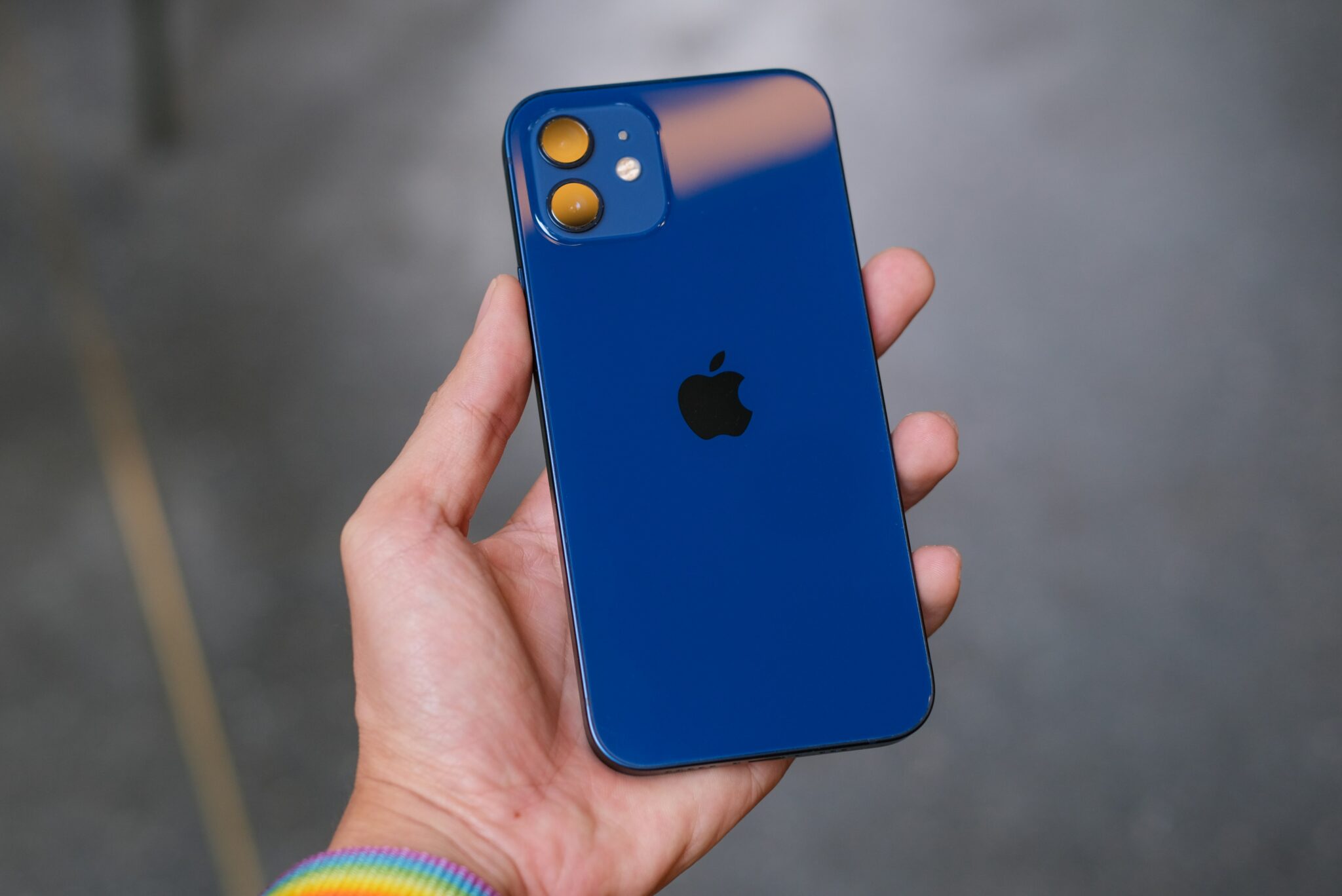
Blue iPhone 12
Display
Both the iPhone 12 and iPhone 14 feature gorgeous 6.1-inch Super Retina XDR OLED displays with similar specifications. They deliver the same resolution, pixel density, HDR support, True Tone technology, and wide color gamut (P3) for vibrant and accurate visuals.
The display technology also incorporates Apple’s True Tone technology, which adjusts the screen’s color temperature based on the ambient light, making for a more comfortable viewing experience in different lighting conditions. Haptic Touch is supported on both models, providing tactile feedback to touch inputs, which enhances the user interaction with the device.
Both the iPhone 12 and iPhone 14 have a typical brightness of up to 800 nits, which can go up to 1200 nits for HDR content. This ensures that the display remains visible even in bright sunlight.
Performance
Apple’s A-series chips are known for their power, and both the iPhone 12 and iPhone 14 deliver excellent performance. However, the iPhone 14 pulls ahead slightly with its A15 Bionic chip.
This chip features a slight improvement in CPU and graphics performance over the iPhone 12’s A14 Bionic, and it also contributes to better battery life and management, even under heavy usage.
For everyday tasks, the performance gap is largely imperceptible. Both phones handle web browsing, social media, productivity apps, and demanding 3D games with ease. Where the iPhone 14’s A15 pulls ahead is in sustained workloads (video editing, augmented reality, and heavy multitasking), where its additional RAM also helps. In 2026, both chips remain capable for day-to-day use even as the iPhone 16 generation has moved further ahead.
Additionally, the iPhone 14 has 6GB of RAM compared to the iPhone 12’s 4GB, providing a smoother multitasking experience.
Cameras
The iPhone 14 retains the dual 12MP camera configuration but introduces significant enhancements, especially in the main wide camera.
It features a larger sensor with sensor-shift optical image stabilization, a technology initially introduced in the iPhone 12 Pro Max, which significantly improves photo and video stability and low-light performance.
The ultrawide camera remains similar in specification but benefits from the overall improvements in the image processing algorithms.
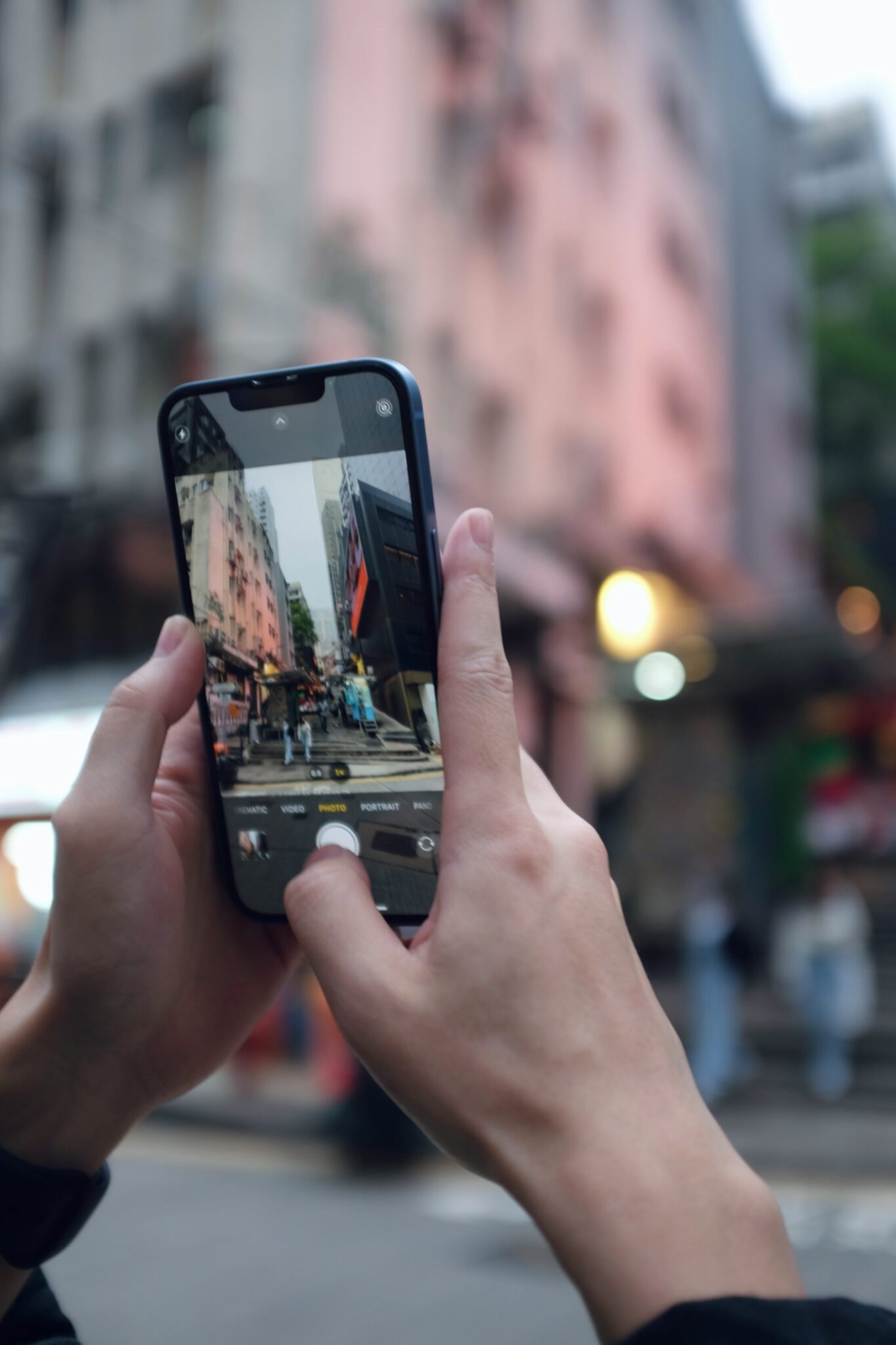
iPhone 14 camera
If you’re truly prioritizing photography and videography, the iPhone 14 brings some significant enhancements to the table:
- Improved low-light performance with Photonic Engine: Apple’s Photonic Engine significantly improves image quality in low-light environments across all the iPhone 14’s cameras. This means better detail, reduced noise, and more vibrant colors in photos and videos captured in challenging lighting.
- Autofocus for sharper selfies and video calls: The front-facing camera on the iPhone 14 now features autofocus, a welcome upgrade. You’ll see noticeably sharper selfies and more consistent focus during video calls.
- Smooth action with Action Mode: The iPhone 14’s new video stabilization mode is designed to capture super steady footage, even if you’re running alongside your subject. It’s perfect for action shots or videos where a traditional gimbal would be impractical.
- Still great photos in good lighting. While the iPhone 14 shines in low-light conditions, it still captures gorgeous, detail-rich photos and videos in good lighting conditions, much like the iPhone 12.
Battery life and charging
The iPhone 14 boasts improved battery life compared to the iPhone 12. Apple claims up to 20 hours of video playback on the iPhone 14, compared to 17 hours on the iPhone 12.
This means a bit more longevity throughout your day, potentially letting you squeeze in extra usage time before needing a recharge.
In terms of charging, both the iPhone 12 and iPhone 14 support:
- Fast-wired charging: Up to 50% of the battery can be charged in approximately 30 minutes with a 20W or higher power adapter (sold separately).
- MagSafe wireless charging: Up to 15W of power with a compatible MagSafe charger.
- Qi wireless charging: Up to 7.5W on compatible Qi wireless chargers.
👉 Related: 9 Best MagSafe Accessories for Your iPhone in 2026
Price and value in 2026
Refurbished pricing is where the choice gets practical. On RefurbMe, a refurbished iPhone 12 starts around $139 and a refurbished iPhone 14 starts around $226. RefurbMe compares live listings from verified refurbishers including Back Market, Amazon Renewed, and eBay Refurbished, and which merchant offers the lowest price shifts daily with stock and condition, so always check the live listing before you buy.
That gap of roughly $85 buys you the iPhone 14's better camera, extra RAM, longer battery, and a longer software runway. If your budget is firm and you mostly text, browse, and stream, the iPhone 12 still covers it. If you want the phone to feel current for two or more years, the iPhone 14 earns the premium.
Conclusion
The iPhone 14 is the stronger long-term buy in 2026, thanks to its superior camera system, longer software support runway, extra RAM, and safety features like Crash Detection. If you can find a refurbished iPhone 14 within your budget, it is the smarter investment.
That said, the iPhone 12 remains a genuinely capable device. At its refurbished price point in 2026, it delivers solid day-to-day performance, a reliable dual-camera system, MagSafe support, and 5G connectivity, everything most users need for everyday tasks.
The decision comes down to how long you plan to keep the phone. For two or more years of comfortable use without worrying about software updates, the iPhone 14 is worth the small premium.
Which should you buy?
Buy the iPhone 14 if photography, longevity, and safety features matter, and if your refurbished budget reaches the low $200s. Buy the iPhone 12 if you want the lowest price on a still-capable 5G iPhone and plan to upgrade again within a year or two. Both run iOS 27 today, so neither choice leaves you stranded right now.
Browse our live listings for both models on RefurbMe and compare the best refurbished prices right now. 👇
64GB storage
Black
We compare prices from reputable sellers, helping you find the perfect iPhone at the right price, all with a warranty included.
Frequently asked questions
Explore more iPhone comparisons 👇
Last updated: Sep 15, 2026 · First published: Apr 2, 2024