



When you shop for a pre-owned device, two labels appear more often than any others: remanufactured and refurbished. Retailers use them interchangeably, but they describe fundamentally different processes, with real consequences for the warranty you receive, the condition of the parts inside, and ultimately how much confidence you can place in what you are buying.
This guide unpacks every meaningful distinction, from what happens on the factory floor to which option suits different budgets and needs.
The short answer: refurbishing restores a used device to good working order by repairing or replacing only the parts that failed, then retesting it. Remanufacturing goes further, stripping the product down completely and rebuilding it to the original factory specification, with a warranty to match. Refurbished is the norm for consumer electronics like iPhones and MacBooks, while true remanufacturing stays mostly an industrial and automotive practice.
RefurbMe tracks the refurbished Apple market first-hand, and the timing is more predictable than most buyers expect. A refurbished iPhone first reaches the resale market a median of 82 days after Apple's release date, a figure RefurbMe calls Time-to-Refurb (as of July 2026), so refurbished stock of a given model usually shows up within about three months. You can check the current number on RefurbMe's iPhone refurbished stats.
Table of contents
- What is remanufacturing?
- What is refurbishing?
- Remanufactured vs. refurbished: side-by-side comparison
- How do open box and reconditioned fit in?
- Environmental impact
- Which one should you choose?
- FAQ
What is remanufacturing?
Remanufacturing is the process of fully disassembling a product, replacing every worn or out-of-spec component with new or remanufactured parts, and reassembling it to meet or exceed the original manufacturer's specifications, verified through comprehensive testing at each stage.
It is more than a repair. Every unit goes through a documented sequence: disassembly with component inventory, deep cleaning, engineering-reviewed inspection, part replacement driven by specification thresholds rather than visible failure alone, assembly with dimensional checks at each step, and a final performance test. The result is a product that meets OEM standards end to end, backed by a warranty that is equivalent to, or better than, that on a brand-new unit.
Remanufacturing is most common in industrial sectors such as automotive components, hydraulic equipment, and heavy machinery. In those markets it is governed by recognized quality frameworks including ISO 9001 (Quality Management Systems) and, in some cases, EPA guidelines for equipment such as electrical switchgear. The EPA has documented that remanufactured circuit breakers can outperform new equipment in standardized testing because the remanufacturing protocol is more rigorous than original production-line checks.
For consumer electronics, true remanufacturing is rare. Most phones and laptops sold as "remanufactured" are actually refurbished to a high standard, a distinction worth understanding before you pay a premium.
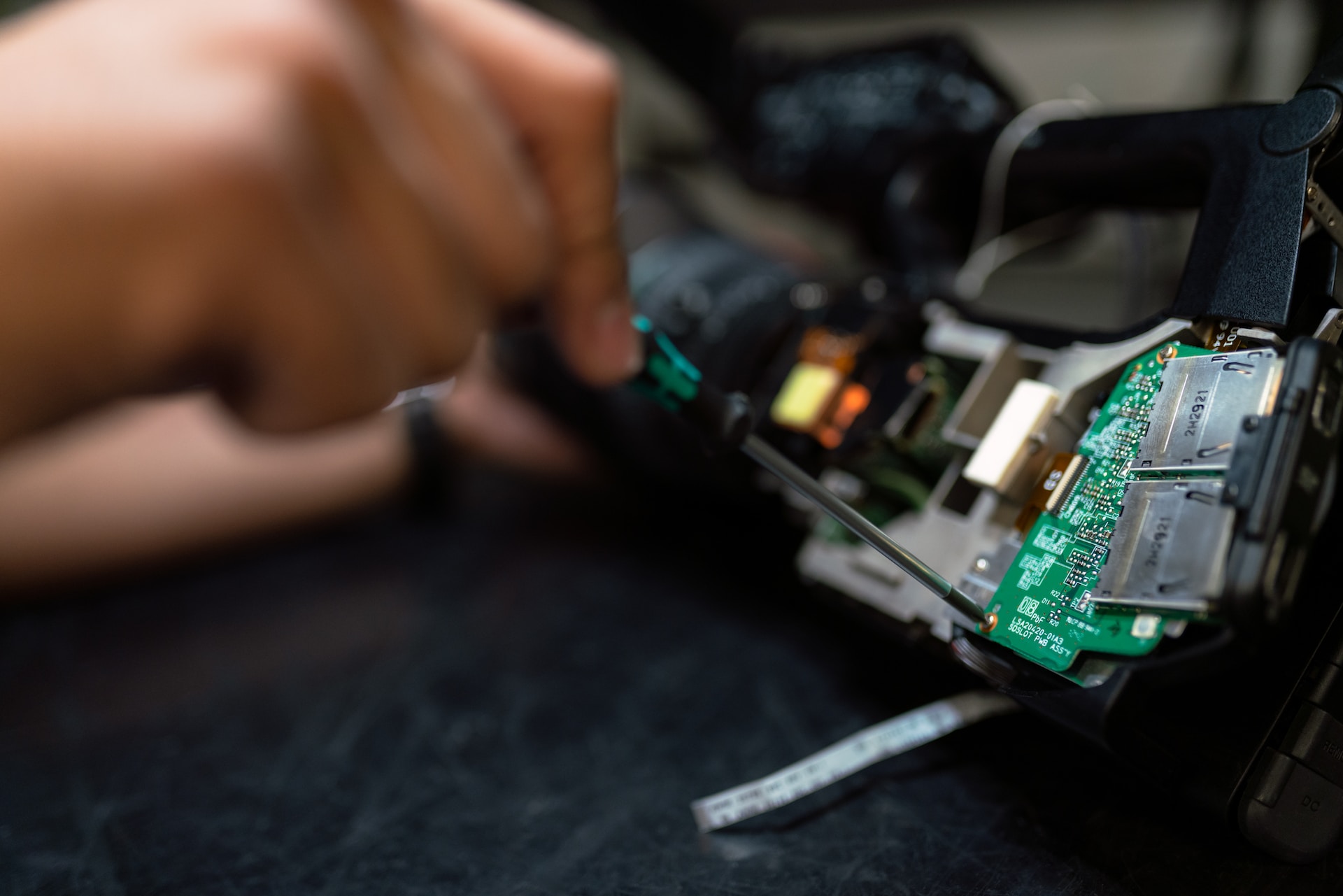
What is refurbishing?
Refurbishing means restoring a used device to functional, cosmetically acceptable condition, replacing or repairing only the components that have failed or fall below a quality threshold, then verifying the result through standardized testing.
Refurbished grades (A, B, C) communicate how closely the cosmetic result matches a new unit, not the depth of the internal work. A Grade A refurbished iPhone may look pristine but still carry its original logic board and battery unless those components tested below spec.
The refurbished electronics market is growing fast. According to industry projections, it will expand from roughly $141 billion in 2025 to $487 billion by 2035, a compound annual growth rate of 13.2 percent. Consumer savings are a primary driver: refurbished devices typically sell at 20 to 50 percent below new retail prices, while remanufactured units in industrial categories command savings of 40 to 70 percent versus new.
Reputable refurbishers follow structured processes: full functional testing, software wipe and reinstall, battery health verification (most require at least 80 percent), blacklist checks, and cosmetic grading. Certification bodies such as SERI's Responsible Recycling (R2v3) standard set minimum environmental, safety, and data-security requirements across the reverse supply chain.
Some manufacturers refurbish products themselves, going further than most third-party resellers. Apple Certified Refurbished is a clear example. Apple ships every certified iOS device (iPhone, iPad, iPod) with a new battery and a new outer shell, fits genuine Apple replacement parts as needed across the whole lineup, and includes all accessories and a one-year warranty, the same coverage as a new device. That combination of new consumables on iOS devices and a manufacturer-backed warranty moves Apple's certified program closer to remanufacturing standards than typical refurbishment, even if Apple does not use the term.

1.6Ghz Intel Dual-Core i5 8th gen
8GB memory • Silver
with Touch Id • 2018 release

64GB storage
Space Gray

1.6Ghz Intel Dual-Core i5 5th gen
4GB memory • Silver
2015 release
Remanufactured vs. refurbished: side-by-side comparison
| Factor | Remanufactured | Refurbished |
|---|---|---|
| Disassembly | Complete, every component inspected | Targeted, focused on identified faults |
| Part replacement | All worn/out-of-spec parts replaced | Only failed or deficient parts replaced |
| Specification compliance | Must meet or exceed original OEM specs | Restored to functional working condition |
| Testing | Multi-stage, documented at each step | Final functional and cosmetic checks |
| Warranty | Equivalent to or better than new | Varies: 90 days to 1 year is typical |
| Typical cost saving vs. new | 40 to 70 percent | 20 to 50 percent |
| Common sectors | Automotive, industrial, heavy equipment | Consumer electronics, appliances |
| Regulatory framework | ISO 9001, EPA guidelines (industrial) | R2v3 (SERI), varies by region |
In consumer electronics, the line blurs. A manufacturer-certified refurbished phone with new internals and a one-year warranty delivers much of what remanufacturing promises. A third-party refurbished device with a 90-day warranty and unknown battery history offers less certainty. The label matters less than the specifics: what was replaced, who certified it, and what warranty is included.
How do open box and reconditioned fit in?
Two more labels appear frequently alongside remanufactured and refurbished.
Open box products were purchased, opened, and returned, often without ever being used. They may have been repackaged after a quick inspection or sold as-is. Open box devices carry more uncertainty than refurbished units because the testing standard is typically lower and the return reason is unknown.
Reconditioned sits between refurbished and remanufactured. Like remanufacturing, it involves replacing damaged or worn components. Unlike remanufacturing, it does not require full specification compliance or equivalent warranty coverage. Reconditioned products often lack standardized documentation and are not covered by the original manufacturer's warranty. This makes "reconditioned" a weaker assurance than "remanufactured," even though the terms sound similar.
The hierarchy, from least to most rigorous, runs roughly: used or open box → refurbished → reconditioned → remanufactured. In practice, a manufacturer-certified refurbished device often exceeds a generic "reconditioned" unit in both quality and consumer protection.
Environmental impact
Both paths divert hardware from landfill and reduce demand for new raw materials, but the scale differs.
Remanufacturing can reduce manufacturing-related carbon emissions by up to 85 percent compared to producing a new equivalent unit, primarily because it avoids the energy-intensive extraction and processing of raw materials. Refurbishing typically delivers a 60 to 80 percent reduction in carbon footprint relative to new manufacturing, depending on the device category and the share of components that are reused.
Either route supports the circular economy, the principle that products and materials should stay in use as long as possible. Choosing a certified refurbished MacBook over a new one, for instance, avoids roughly 70 kg of CO2-equivalent emissions that the production of a new laptop generates. Choosing remanufactured industrial equipment can conserve even more, since those supply chains involve larger volumes of metals and specialty materials.
Which one should you choose?
For most consumer electronics buyers, the practical choice is between refurbished tiers, not between refurbished and remanufactured, because true remanufactured consumer electronics are uncommon. Here is a simple framework:
Choose manufacturer-certified refurbished (Apple, Samsung Certified Renewed, Microsoft, etc.) when you want the closest thing to new (genuine parts, documented testing, and a full-year warranty) at a 15 to 30 percent discount.
Choose reputable third-party refurbished (R2-certified resellers such as Back Market, Amazon Renewed, or eBay Refurbished) when you want broader selection or deeper savings and are comfortable with warranty terms that vary by seller. Back Market, for example, backs its refurbished devices with a one-year warranty and a 30-day return window. eBay Refurbished is eBay's vetted program of graded, seller-checked listings, which is a different thing from the open eBay marketplace where used items sell as-is.
Choose remanufactured when you are purchasing industrial or automotive equipment and need OEM-equivalent performance guaranteed by documentation and a full warranty.
Avoid uncertified "reconditioned" or "open box" unless the seller offers transparent testing results and a meaningful return window.
If you are looking for certified refurbished Apple devices (iPhones, iPads, MacBooks, and more), RefurbMe aggregates verified deals from trusted sellers in real time, including pricing, warranty terms, and return policies side by side. That makes it straightforward to find the best-value option without reading the fine print on five separate websites.
FAQ
Last updated: Jul 23, 2026 · First published: May 19, 2023