



Refurbished means a previously owned or returned product that a refurbisher has inspected, repaired if needed, wiped, tested, and put back on sale, usually with a warranty. It is not the same as a used item sold as-is. The word describes a process, not a defect: a working device restored to a known standard and resold for less than new.
The labels around second-hand electronics get confusing fast: used, pre-owned, renewed, open-box, certified. Below we define refurbished in plain terms, separate it from those neighbors, explain how grading and warranties work, and show how to buy a refurbished Apple product without getting burned.
In short: A refurbished device has been professionally checked, repaired, data-wiped, tested, and graded before resale, and it typically ships with a warranty and a return window. Quality depends on who did the work and the grade you buy, not on the word itself. For recent Apple models, expect to pay roughly 15 to 30 percent less than new.
What does refurbished mean?
A refurbished product is a used, returned, or ex-display device that a manufacturer or specialist refurbisher has restored to full working order and resold. The reseller inspects the unit, replaces failed or worn parts, erases the previous owner's data, runs functional tests, assigns a cosmetic grade, and repackages it. The result is a working product backed by a warranty, priced below new.
That is the core difference from a plain used sale. A used or pre-owned device changes hands as-is, with no repair, no testing promise, and usually no warranty. Refurbishment adds all three.
Is refurbished good, or is it just broken?
Refurbished is not a polite word for broken. A common misread is that refurbished means faulty or rejected stock, when most refurbished inventory is simply returns, trade-ins, ex-display units, or open-box items that never had anything wrong with them. The refurbisher's job is to confirm the device works, fix anything that does not, and certify the result. A well-refurbished device from a reputable seller performs like the same model bought new; what you trade away is the factory seal and a little cosmetic perfection, not reliability.
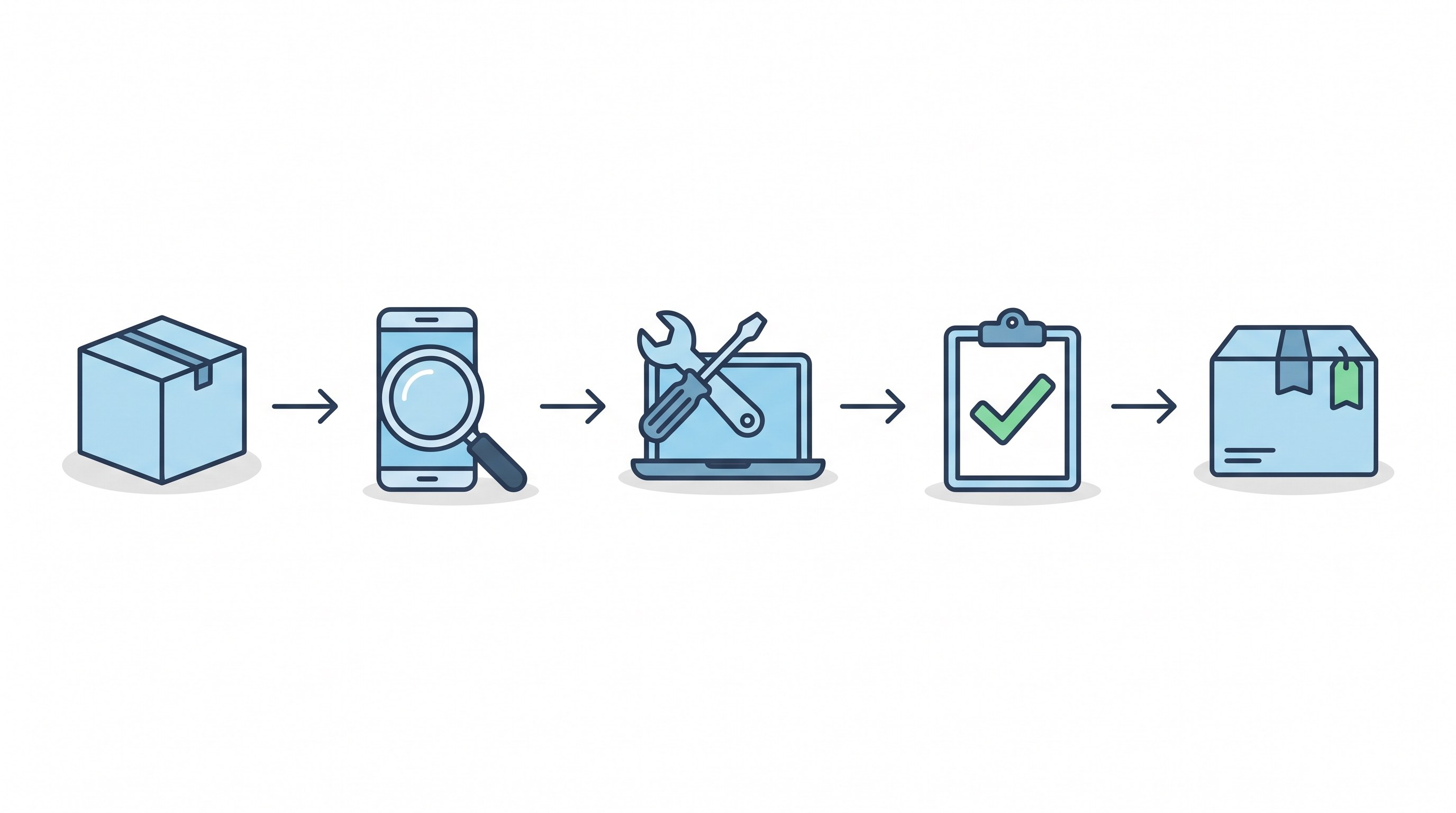
How the refurbishment process works
Most refurbishers follow the same broad steps, whether the device is a phone, a laptop, or a tablet:
- Intake and inspection: the device is logged and checked for faults.
- Repair and part replacement: failed components (a swollen battery, a cracked screen) are replaced.
- Data wipe: the previous owner's data is fully erased and the software is reset.
- Functional testing: every subsystem (battery, cameras, ports, radios) is tested against a checklist.
- Cosmetic grading and repackaging: the unit is rated for wear and boxed for resale.
According to RefurbMe's own tracking, a refurbished iPhone first reaches the refurbished market a median of 82 days after Apple releases it (as of July 2026), so buyers typically wait under three months for the first refurbished units to appear. That figure is our Time-to-Refurb metric: the median number of days between Apple's release of a model and the first time we record it in stock refurbished. You can see the live number on the RefurbMe iPhone stats page.
How long you wait depends on the product family. Here is the median Time-to-Refurb for the most popular Apple lines, from RefurbMe's tracking history:
| Apple family | Median days from release to first refurbished (as of July 2026) |
|---|---|
| iPhone | 82 |
| MacBook Air | 99 |
| iPad | 115 |
| MacBook | 168 |
Source: RefurbMe /stats release-to-refurbished tracking. Newer, high-volume lines like iPhone turn over fastest.
Refurbished vs used, renewed, open-box, and certified
These terms overlap, and sellers do not always use them consistently. The distinctions that actually matter are whether the device was repaired and tested, and whether it comes with a warranty.
| Term | What it usually means | Repaired and tested? | Warranty? |
|---|---|---|---|
| Used / pre-owned | Sold as-is by the previous owner | No | Rarely |
| Open-box | Returned but essentially new, little or no rework | Sometimes | Often (short) |
| Refurbished | Inspected, repaired, wiped, tested, graded | Yes | Usually |
| Renewed | Amazon's brand name for refurbished | Yes | Usually |
| Certified refurbished | Refurbished to a defined standard by a vetted program | Yes | Yes |
A few clarifications worth keeping straight:
- Renewed is refurbished. "Renewed" is mostly Amazon's label for the same process every other refurbisher calls refurbished. There is no quality difference baked into the word.
- Certified refurbished signals a defined standard plus a warranty, which is why programs like Apple's carry that label. See our guide to what certified refurbished actually means.
- Recertified is a close cousin, often used for enterprise returns; we break down refurbished vs recertified separately.
- Pre-owned is the plain used category; here is refurbished vs pre-owned in full.
How refurbished products are tested and graded
Two separate things get confused here: functional condition and cosmetic condition. Functional testing decides whether the device works. Cosmetic grading describes how it looks. A device can look scuffed (a lower cosmetic grade) and still pass every functional test.
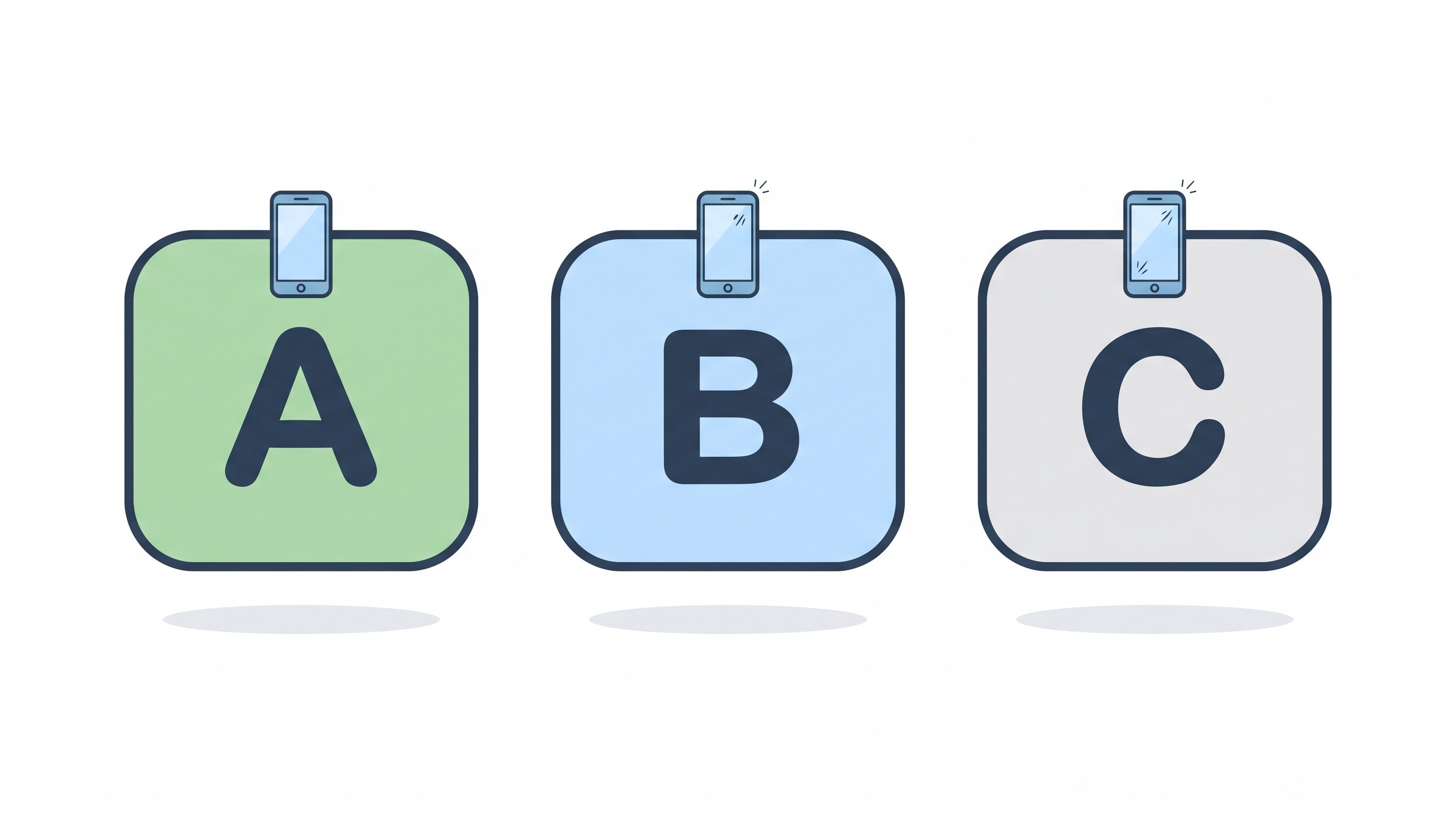
Most refurbishers use an A, B, C grading scale for appearance:
- Grade A: near-mint, little to no visible wear.
- Grade B: light, normal signs of use such as faint scratches.
- Grade C: heavier cosmetic wear, but still fully functional.
The grade changes the price, not the way the device works. If you care mostly about saving money and not about a stray scratch, a Grade B or C unit is often the better value. Our full explainer covers what refurbished grades A, B, and C mean, including how different sellers label them.
Is refurbished safe and worth it?
Yes, refurbished is safe to buy when you buy from a vetted seller that tests its stock and stands behind it with a warranty and a return window. The risk is not the word "refurbished"; it is buying from a source with no protections.
Warranty terms are the clearest signal of a serious refurbisher. Apple Certified Refurbished products, for example, "include a one-year warranty, full functional testing," and savings up to 15 percent, according to Apple's refurbished store. Independent refurbishers vary: many offer 12 months, some offer 24, and returns windows commonly run 14 to 30 days.
Before you buy, confirm three protections:
- Warranty: how long, and who honors it.
- Returns: the window and whether returns are free.
- Payment protection: buying through a reputable platform adds a layer if something goes wrong.
Consider a common scenario: a student buys a Grade B refurbished MacBook Air for a semester of coursework. It arrives with a couple of faint lid scratches, a fresh software reset, and a 12-month warranty. Two years later it is still running, and the buyer paid a few hundred dollars less than the new price. That is the ordinary refurbished outcome, not a lucky exception.
If you want the deeper case, we cover whether Apple refurbished is worth it and the pros and cons of refurbished MacBooks in detail.
What to expect from the battery
Battery is the part most affected by prior use, so it deserves a separate check. Some refurbishers replace the battery outright; others publish a minimum battery health figure (for example, 85 percent or higher) and disclose it on the listing. For a phone or a laptop, a stated battery health number or a confirmed replacement is a sign of a thorough refurbisher. If a listing says nothing about the battery, treat that silence as a reason to ask before buying.
Refurbished vs new: is the trade-off worth it?
Against a brand-new unit, a refurbished device gives up two things: the shorter cosmetic-perfection guarantee and, sometimes, a slightly shorter warranty. What you keep is the same core function, a genuine warranty, and a real price cut. For most buyers who do not need the newest model on release day, that trade is clearly worth it, especially one or two generations back where refurbished stock is deepest and discounts are largest.
How much do you save buying refurbished?
For recent Apple models, refurbished typically costs about 15 to 30 percent less than new, and older models can be far cheaper. The exact saving depends on the model, the grade, and how long it has been on the market.
A word of caution on headline percentages. Across every iPhone model RefurbMe has ever tracked, the median discount versus the original Apple release price is about 79 percent (as of July 2026), but that family median is skewed upward by legacy models from many years ago and does not mean you save that much on a current iPhone. For today's saving on a specific model, always check the live price rather than a family-wide average.
The cleanest way to see a real saving is to compare the live floor across sellers. For example, a refurbished iPhone 15 currently starts at , which you can weigh against the new price on the same page. Our guide to the refurbished iPhone 15 walks through when it makes sense.

64GB storage
Black
64GB storage
Black
64GB storage
Black
The sustainability case for refurbished
Buying refurbished keeps a working device in use instead of sending it to landfill, which is the core of the circular economy for electronics. Every refurbished purchase avoids the manufacturing footprint of a brand-new unit and reduces electronic waste. Refurbishment, as Wikipedia's overview of electronics refurbishment notes, extends a product's usable life through repair and resale.
The market has scaled to match the demand. The global refurbished electronics market was valued at about US$68 billion in 2026 and is projected to grow at roughly a 10.4 percent compound annual rate through 2033, according to Coherent Market Insights. Apple sits at the center of that shift: it leads the global refurbished smartphone market with a 58 percent share, according to Counterpoint Research data reported in April 2026.
Buying refurbished Apple products: what to check and where to buy
Once you know the device is genuinely refurbished, the buying checklist is short:
- Seller reputation: an established refurbisher with reviews and a support channel.
- Grade: know whether you are buying Grade A, B, or C, and what that seller means by it.
- Warranty and returns: at least a stated warranty and a return window.
- Battery health: for phones and laptops, look for a stated battery health or a replaced battery.
For where to buy, several vetted refurbishers compete on refurbished Apple stock. In the US market, Back Market is the largest specialist marketplace, Gazelle is a long-running US refurbisher, Amazon Renewed lists vetted third-party refurbishers, and eBay Refurbished is eBay's vetted Certified and Refurbished program (graded conditions, a seller-trust floor, 30-day returns, and a 12 to 24 month warranty). Apple's own Certified Refurbished store is the safest single source, though usually not the cheapest. Is Amazon Renewed reliable? We answer that separately.
Because prices and stock move constantly across those sellers, the practical move is to compare them side by side rather than commit to one. RefurbMe does exactly that for refurbished MacBook, refurbished iPhone, and refurbished iPad prices.
Which refurbished Apple products offer the best value
The deepest refurbished value tends to sit one or two generations back, where stock is plentiful and the original owner has already absorbed the steepest depreciation. RefurbMe's tracking shows the biggest, most reliable refurbished catalogues in the iPhone, MacBook, and iPad families, which is why those are the categories most buyers start with. If you are flexible on the exact model, shopping the previous generation of any of those lines is usually where the price-to-performance ratio peaks. If you need the current flagship, refurbished still saves money, just a smaller percentage, because early refurbished stock is thinner and discounts are shallower.
Compare refurbished Apple prices
See live prices for refurbished MacBook, iPhone, and iPad across vetted refurbishers in one place.
Compare prices
1.6Ghz Intel Dual-Core i5 5th gen
4GB memory • Silver
2015 release

1.6Ghz Intel Dual-Core i5 5th gen
8GB memory • Silver
2015 release
1.6Ghz Intel Dual-Core i5 5th gen
4GB memory • Silver
2015 release
Red flags: how to spot a bad refurbished deal
A deal that avoids the word "refurbished" and skips the protections is the one to walk away from. Watch for these warning signs:
- No warranty and no return policy. A serious refurbisher offers both.
- No stated grade or condition. Vague listings hide cosmetic or functional problems.
- A price that is far too good. A current flagship at a fraction of retail is a red flag, not a bargain.
- An anonymous, unvetted seller with no track record or support channel.
One distinction matters here. eBay Refurbished, the vetted program described above, is not the same as the open, peer-to-peer eBay marketplace where private individuals sell used items as-is. The refurbished program carries graded conditions, a warranty, and returns; a random used listing on the open marketplace carries none of that. When you shop on any large marketplace, make sure you are buying from the certified refurbished channel, not an unvetted private listing.
FAQ
First published: Jul 15, 2026

