

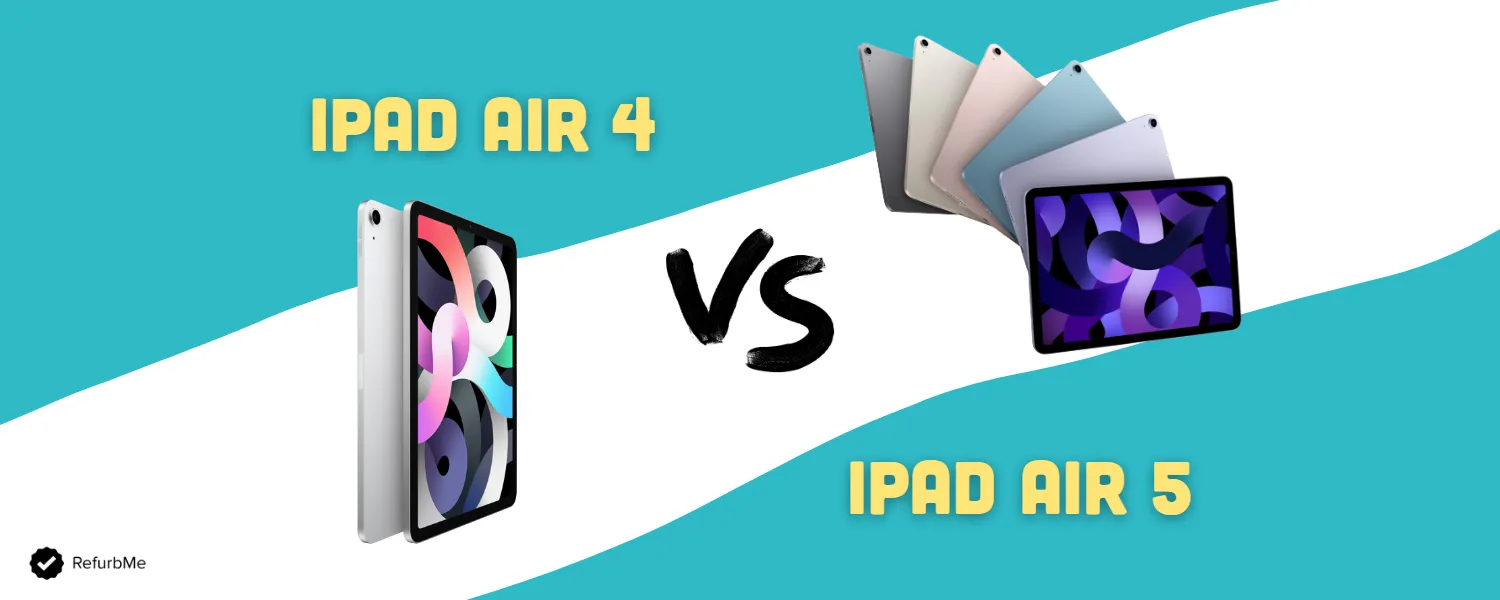
With Apple now shipping the iPad Air M2 (2024) and the newer iPad Air M3 (2025), the 2020 iPad Air 4 and 2022 iPad Air 5 have settled into the value tier of the refurbished market. That is exactly what makes them interesting: both are slim, capable tablets at a fraction of current-generation prices, and as of June 2026 a refurbished iPad Air 4 starts around $209 while the iPad Air 5 starts around $247. The performance gap between the A14 Bionic and the M1 chip is still real, and knowing where it matters can save you money or future-proof your purchase. In this comparison guide, we break down every key difference between the iPad Air 4 and the iPad Air 5 so you can confidently choose the right model for your needs and budget.
According to RefurbMe's tracking for its Refurbished Apple Price Index (RAPI), a new iPad Air model first reaches the refurbished market a median of 95 days after Apple's release (as of June 2026). Time-to-Refurb measures the median lag from launch to first refurbished availability across the family, so once a generation lands, refurbished units like the Air 4 and Air 5 follow within roughly three months and keep falling in price.
Table of contents
- iPad Air 4 vs. iPad Air 5: Specs comparison table
- Reasons to buy the iPad Air 5
- Design
- Display
- Cameras
- Performance
- iPad Air 4 vs. iPad Air 5: The verdict
- Frequently asked questions
iPad Air 4 vs. iPad Air 5: Specs comparison table
| Features | iPad Air 4 (2020) | iPad Air 5 (2022) |
|---|---|---|
| Screen size | 10,9″ | 10,9″ |
| Display | Liquid Retina LED | Liquid Retina LED |
| Brightness | 500 nits | 500 nits |
| Resolution | 2360 x 1640 at 264 ppi | 2360 x 1640 at 264 ppi |
| Dimensions | 9.74 x 7.02 x 0.24 in (247.6 x 178.5 x 6.1 mm) | 9.74 x 7.02 x 0.24 in (247.6 x 178.5 x 6.1 mm) |
| Weight | 1.02 pounds (461 g) | 1.02 pounds (461 g) |
| Colors | Blue, green, silver, space gray, and rose gold | Blue, purple, pink, space gray, and starlight |
| CPU | Apple A14 Bionic | Apple M1 |
| RAM | 4GB | 8GB |
| Cameras | 12MP rear camera 7MP front camera | 12MP rear camera 12MP ultra-wide front camera |
| Storage | 64GB 256GB | 64GB 256GB |
| Battery life | Up to 10 hours on Wi-Fi | Up to 10 hours on Wi-Fi |
| Apple Pencil compatibility | 2nd generation | 2nd generation |
| Max OS compatibility | iPadOS 18 | iPadOS 18 |
| Cellular | 4G LTE | 5G |
| Connectors | USB-C | USB-C |
| Price (refurbished) | Starting at | Starting at |
Reasons to buy the iPad Air 5
There are compelling reasons to choose the iPad Air 5 over the older 2020 model, especially when buying refurbished:
- Apple’s M1 chip delivers 50-60% faster CPU performance and roughly twice the GPU speed compared to the A14 Bionic.
- 8GB of RAM (vs. 4GB) keeps more apps in memory and handles creative workloads without slowdowns.
- 5G cellular support future-proofs the connected version for years of fast mobile data.
- It excels at gaming, video editing, augmented reality, and productivity apps like Procreate and LumaFusion.
- The upgraded 12MP ultra-wide front camera with Center Stage makes FaceTime and video calls noticeably better.
- USB-C transfer speeds double from 5 Gbps to 10 Gbps, meaningful if you work with large files.
- Refurbished iPad Air 5 prices have dropped significantly since launch, narrowing the gap with the Air 4.
👉 Learn more: How Long Do iPads Last?
Design
Design is one area where you genuinely cannot tell these two tablets apart. Both the iPad Air 4 and iPad Air 5 measure 9.74 x 7.02 x 0.24 inches and weigh 1.02 pounds. Apple kept the chassis completely unchanged between generations. What does differ is color: the Air 4 came in Blue, Green, Silver, Space Gray, and Rose Gold, while the Air 5 swapped those for Blue, Purple, Pink, Space Gray, and Starlight.
The all-screen design with Touch ID built into the top button remains one of the most practical layouts Apple has ever made. Whether you are a student, a commuter, or someone who simply wants a tablet that slips easily into a bag, the iPad Air delivers portability without compromising much on power. They are also among the best iPads for kids and teenagers who need something durable and light.
Display
The display is another category where both generations match perfectly. Both the iPad Air 4 and the iPad Air 5 feature a 10.9-inch Liquid Retina display running at 2360 x 1640 resolution (264 ppi) with a peak brightness of 500 nits.
Beyond the raw numbers, the panel experience is identical: wide P3 color gamut for vivid photos and video, True Tone technology that adjusts white balance to ambient light, and a fingerprint-resistant anti-reflective coating with just 1.8% reflectivity. The result is a screen that holds up well in daylight and looks excellent for streaming, reading, and drawing.
If the display is your main consideration and you want the most savings possible, the iPad Air 4 makes complete sense here. You are getting the exact same visual experience for less money.
Cameras
Both tablets share an identical 12MP rear camera with the same aperture and video capabilities, so photo and scanning tasks are equal across models. The meaningful difference lives in the front.
The iPad Air 5's front camera jumps from the Air 4's 7MP f/2.2 lens to a 12MP ultra-wide f/2.4 lens. This is a significant upgrade for anyone who uses their iPad for video calls, content creation, or live streaming. The wider field of view captures more of the room naturally without zooming out manually.
The front camera on the iPad Air 5 also gains Apple's Center Stage, a machine-learning feature that automatically pans and zooms to keep you centered in the frame as you move. When another person joins the call, the camera widens to include them. It is genuinely useful during remote work, online classes, or family video calls.
If you primarily use your iPad for desk work and rarely video call, the Air 4's camera is perfectly adequate. But if FaceTime or video meetings are a regular part of your day, the Air 5's camera upgrade alone can justify the price difference.
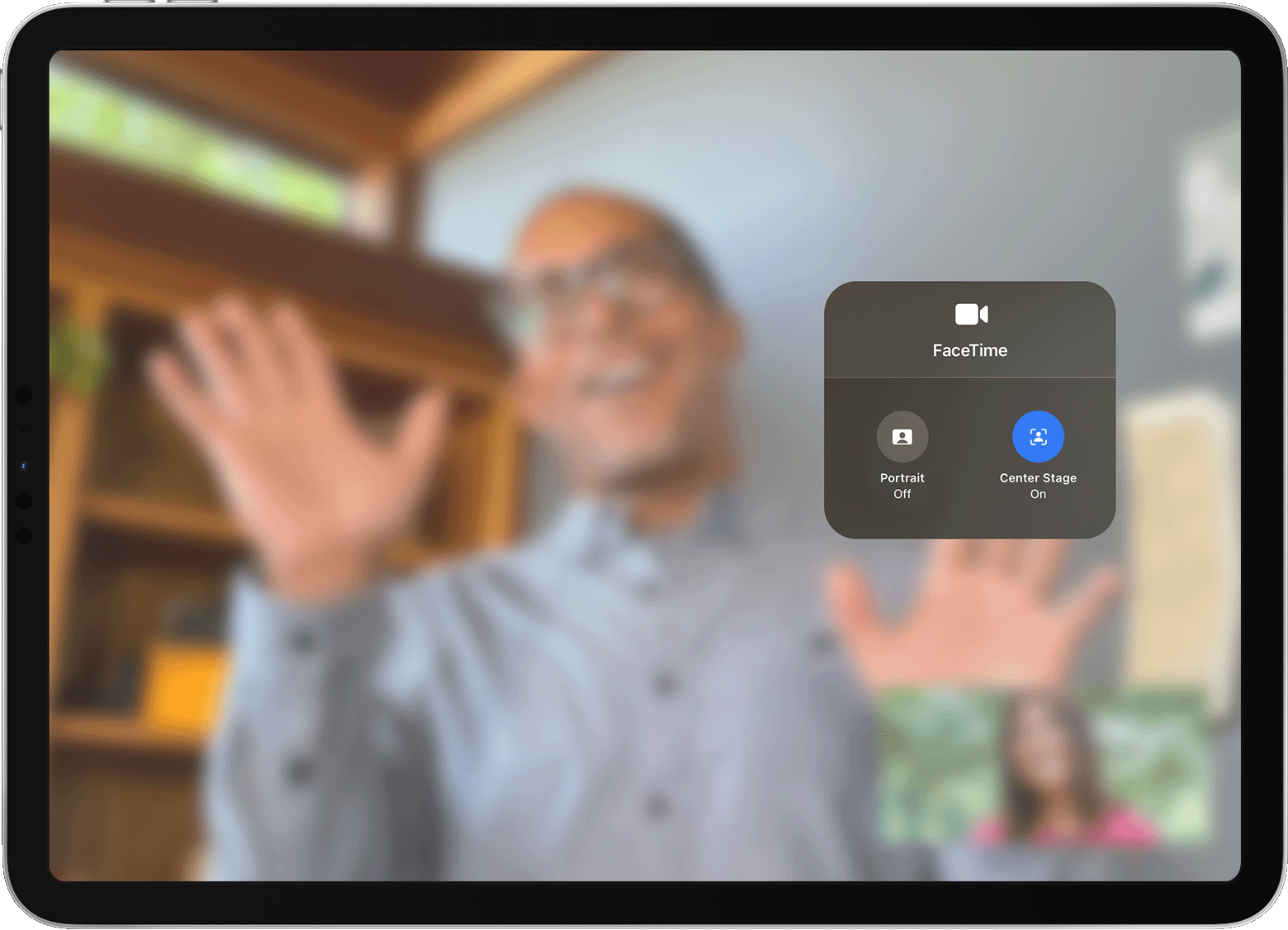
How to activate Center Stage Image credit: Apple
Performance
Performance is the single biggest reason to choose the iPad Air 5 over its predecessor. Apple’s M1 chip, the same silicon found in MacBook Pro and MacBook Air models, delivers a generational leap over the A14 Bionic in the Air 4. Benchmarks consistently show 50-60% faster CPU performance and roughly double the GPU throughput, which translates into smoother gameplay, faster video exports, and more fluid multitasking.
The A14 Bionic in the iPad Air 4 is far from slow. It handles browsing, streaming, notes, light photo editing, and creative apps like Procreate without any issues. But once you push into sustained creative workloads (long Procreate sessions, 4K video editing in LumaFusion, or graphically intensive games), the M1’s larger thermal headroom and doubled GPU cores become tangible.
👉 Learn more: 20 Best iPad Games
The extra 4GB of RAM (8GB total vs. 4GB) is equally important for power users. More RAM means more apps stay active in the background without needing to reload, and it gives demanding apps more room to operate. USB-C transfer speeds also double from 5 Gbps to 10 Gbps on the Air 5, which matters if you move large video files or connect external storage.
On the cellular front, the iPad Air 5 supports 5G while the Air 4 is limited to 4G LTE, a future-proofing advantage that grows more valuable every year.
Both tablets run iPadOS 18 and support the same iPadOS features, including Stage Manager, Continuity Camera, and all current Apple Pencil 2nd generation functionality.
👉 Learn more: 5 Best Apple Pencil Accessories
iPad Air 4 vs. iPad Air 5: The verdict
Both the iPad Air 4 and the iPad Air 5 are excellent tablets, but they suit different buyers. The CPU gap is the deciding factor for most people: Apple’s M1 chip in the Air 5 offers 50-60% faster CPU performance and twice the GPU power, which adds up to years of additional usable life for demanding workflows.
Choose the iPad Air 4 if: you primarily browse, stream, take notes, or read, and you want to save as much money as possible. The display, design, and accessories are identical to the Air 5, and the A14 Bionic handles everyday tasks without hesitation.
Choose the iPad Air 5 if: you use creative apps, edit video, play graphics-intensive games, or rely on your iPad for video calls and remote work. The M1 chip, doubled RAM, 5G cellular option, and better front camera are all real-world upgrades that justify the modest price premium, especially on the refurbished market where the gap has narrowed considerably.
With the iPad Air M2 (2024), M3 (2025), and now M4 (2026) leading Apple's lineup (see our iPad Air buying guide for how every generation compares), both the Air 4 and Air 5 have dropped into clear value territory on the refurbished market. As of June 2026, a refurbished iPad Air 4 starts around $209 and the iPad Air 5 around $247. If long-term software support is a priority, the Air 5's M1 chip puts it several years ahead of the Air 4 in Apple's lifecycle planning, which is why the small premium often pays off.
To get the best price, compare sellers rather than buying the first listing you see. We surface offers from trusted refurbishers including Back Market, eBay Refurbished, and the Apple Store, so you can see who is cheapest for the exact model and condition you want in real time.
If you are interested in saving even more money, consider purchasing a refurbished iPad Air 5. A refurbished model delivers the exact same performance as a brand-new one, comes with a warranty, has been thoroughly tested, and supports the circular economy. For current prices on every generation, see our refurbished iPad Air buying guide.
Check all available refurbished iPad Air 5 models from the best resellers in real time:

64GB storage
Blue
2022 release

64GB storage
Purple
2022 release

64GB storage
Space Gray
2022 release
If the iPad Air 4 fits your needs and budget, compare all available refurbished models here:

64GB storage
Silver
2020 release

64GB storage
Space Gray
2020 release

64GB storage
Sky Blue
2020 release
You can also explore what to do with an old iPad if you are considering an upgrade, check the best refurbished iPads guide, or read our comparisons between the iPad Air 4 and the iPad mini 6 and the iPad Air and iPad Pro.
Frequently asked questions
Last updated: Jul 11, 2026 · First published: Apr 26, 2024

